San Francisco Giants First Trimester Review

In Moneyball, Oakland A’s GM Billy Beane explained to writer Michael Lewis that he breaks a season into thirds when he’s constructing his team. The first third is for figuring out what you have; the second third, leading up the the trade deadline, is for improving what you have; and the final third is letting what you have gel and hopefully making a playoff run.

I’m gonna go out on a limb and say that a guy who became so successful and famous as a baseball GM that Brad Pitt played him in a movie has a pretty good handle on how to evaluate a baseball team.
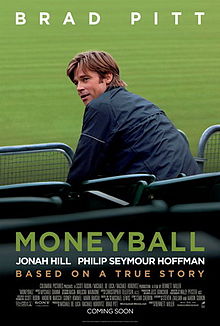
This actor plays a guy who knows a lot about baseball

This actor plays a guy who knows a lot about baseball

So, with most teams hitting the end of the season’s first trimester this week, I thought I’d take stock of the Bay Area’s teams so far and their prospects for the rest of the season. First up, the Giants.

The Good: The Lineup and Bullpen

Most casual fans think of the Giants as a team built around pitching, in particular a dominant starting rotation. This was certainly true in 2010, when the Giants rode Tim Lincecum and Matt Cain (along with some suprising and somewhat flukey contributions from a misfit cast of veteran hitters) to the team’s first championship in San Francisco. But it actually wasn’t as true in 2012. On the surface, the Giants offensive numbers weren’t impressive last year, but that was largely because Phone Booth Ballpark was historically oppressive, particularly of home runs. As a few of the more intelligent baseball analysts out there have pointed out, the Giants led the National League in runs scored on the road last year. And their playoff run was largely built on bashing opposing pitching and outstanding work from the bullpen (along with a few clutch starts from Ryan Vogelsong and Barry Zito).

This season has seen a reprise of the 2012 formula. The Giants are fourth in the NL in runs scored, trailing the best team in the league so far (St. Louis) and two teams that play in notorious bandboxes (Colorado and Cincinnati). Buster Posey has been as outstanding as expected (.294/.382/.492), if not quite as incandescent as he was during his MVP season. Pablo Sandoval has stayed on the field so far, and has put up Kung Fu Panda numbers (.288/.328/.434), and Hunter Pence has provided googly eyes and enough power to offset his low on-base percentage (.290/.335/.505). Brandon Belt started the season in a horrible slump, but has righted the ship to at least passable numbers (.250/.324/.427) that should continue to improve, as well as a number of clutch late-inning hits. And the middle infield has traded hot months, with Brandon Crawford (a probably unsustainable but God it’d be awesome if he really is this good .283/.349/.449) posting a scalding April and folk hero Marco Scutaro (.330/.381/.430) tearing it up in May. Angel Pagan has mostly sucked so far (.262/.314/.374), except for that time he hit a walk-off inside the park home run [link], but on the whole, especially considering that they play half their games in an extreme pitchers’ park, the Giants have had one of the best lineups in baseball so far this season.
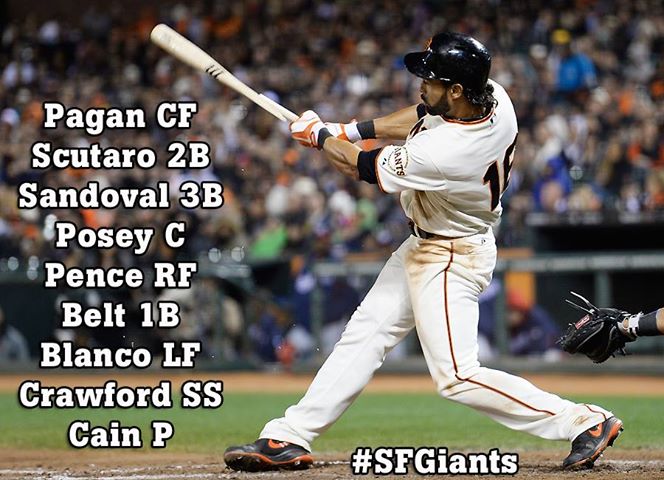
This lineup scores runs

This lineup scores runs

What’s more, the bullpen has once again been a strength. Sergio Romo, my current favorite player in all of baseball, has been stellar as the closer (8.00 K/BB, 2.47 FIP), and Jeremy Affeldt, Santiago Casilla, Jose Mijares, Javier Lopez, and Jean Machi ALL have ERAs below 3.00 (obviously, the sample sizes are very small for relievers this early in the season, but the uniform low ERAs indicate that the relief corps as a whole is keeping opposing lineups on lock down).

I love this guy

I love this guy

The Bad: The Rotation

Start with the silver lining: Madison Bumgarner has been stellar (72 IP, 3.14 K/BB, 3.13 ERA, 3.41 FIP), and has solidified his claim as the top young lefthanded starter in the game. Assuming he doesn’t fall apart in the next month, he should make his first All Star Game this year.

Barry Zito has been exactly what he’s been for years: a guy with poor velocity and shaky command who dominates in the starts when he can locate his pitches and snap off a sharp curveball, and walks a ton of guys and gets shelled in the starts when he can’t. His numbers are pretty close to what he’s put up his last couple of seasons (5.6 K/9, 3.3 BB/9, 3.88 ERA, 3.85 FIP), and while he’ll never be the ace his contract would make you hope for, he’s a perfectly acceptable back of the rotation starter.

The rest of it is, um, not so good. The team, which again plays in one of the most pitcher-friendly parks in baseball, has given up the second most runs in the NL. Matt Cain has gotten shelled so far (5.00 ERA, 4.91 FIP), and while his last couple of starts have been better, the team really needs him to pick up the slack, because Ryan Vogelsong got hurt in the first decent start he was having all year, and the Giants are going to be patching together that fifth starter slot for the next couple of months (and possibly the rest of the season, depending what Vogelsong, who had been mostly horrible before the injury, can give them when he comes back).

Not something you ever want to see

Not something you ever want to see

And then there’s Tim Lincecum, who fans hoped would bounce back and at least resemble his 2011 self after a disastrous 2012 season. Not quite. Timmy hasn’t been as bad as he was last year, but he’s basically the same pitcher he was last year, a guy who both strikes out and walks tons of hitters (9.42 K/9, 4.29 BB/9) because his pitches move a ton, but he doesn’t really know where they’re going. He’ll have starts where he puts up zero after zero, and then he’ll have starts where he has that crooked inning that blows everything up, and you never really know which is which. This is who Timmy is now–less the Cy Young contender of his early career, more an approximation of Jonathan Sanchez back before he completely imploded. Like Zito, he’s not a terrible guy to have, if you have proper expectations, but the Giants appear to have dodged a major bullet when Lincecum turned down that $100 million extension last year. And it may be time, given how Lincecum has continued to struggle as a starter and how dominant he was as a reliever in last year’s playoffs, for him to seriously consider pulling a Dennis Eckersley and switching to relief.

Where can they improve?

The improvement is going to have to come from the starting rotation. How likely is that? Well, I think we can safely expect Cain to rebound in the second half. But with Lincecum and Vogelsong now both question marks, the Giants pretty clearly could stand to add a starter. They called Mike Kickham up from AAA to replace Vogelsong, but he was knocked out of his first start early, and it’s tough to know what he’ll give the team moving forward. There’s not a lot of high end pitching in the minors either, with Zach Wheeler preparing to become an ace for the Mets thanks to the 2011 Carlos Beltran trade (which I’m not criticizing–just saying, that’s the risk you take when you trade a young pitcher). So the team will have to decide if it wants to try to acquire a starter at the deadline, or if they can afford to hang on and wait for Vogelsong.

Overall:

The Giants, at 29-25 are in second place, 1.5 games back of first, on pace for 87 wins. Their run differential is at -2, so they’ve actually overachieved a bit. They’re probably going to have to win the division to make the playoffs, as Wild Card competition will be stiff, with St. Louis, Cincinnati, and Atlanta all looking like certain playoff teams, with Pittsburgh thirteen games over .500, and with me refusing to believe that Washington won’t go on a major run at some point. Fortunately, the West should be winnable. The Padres suck and the Dodgers are in (hold on … wait for it …) last place (HAHAHAHAHAHAHA!!!!). I don’t believe in the Rockies. It should be no surprise that Arizona is good again–I hated the Upton trade and predicted he would be an MVP candidate, but the Snakes underachieved last year after winning the division in 2011, and they’re the team I expect the Giants to battle in the second half.
Posted in Baseball, Sports | Tagged , | 2 Comments

On Ray Manzarek and Jim Morrison

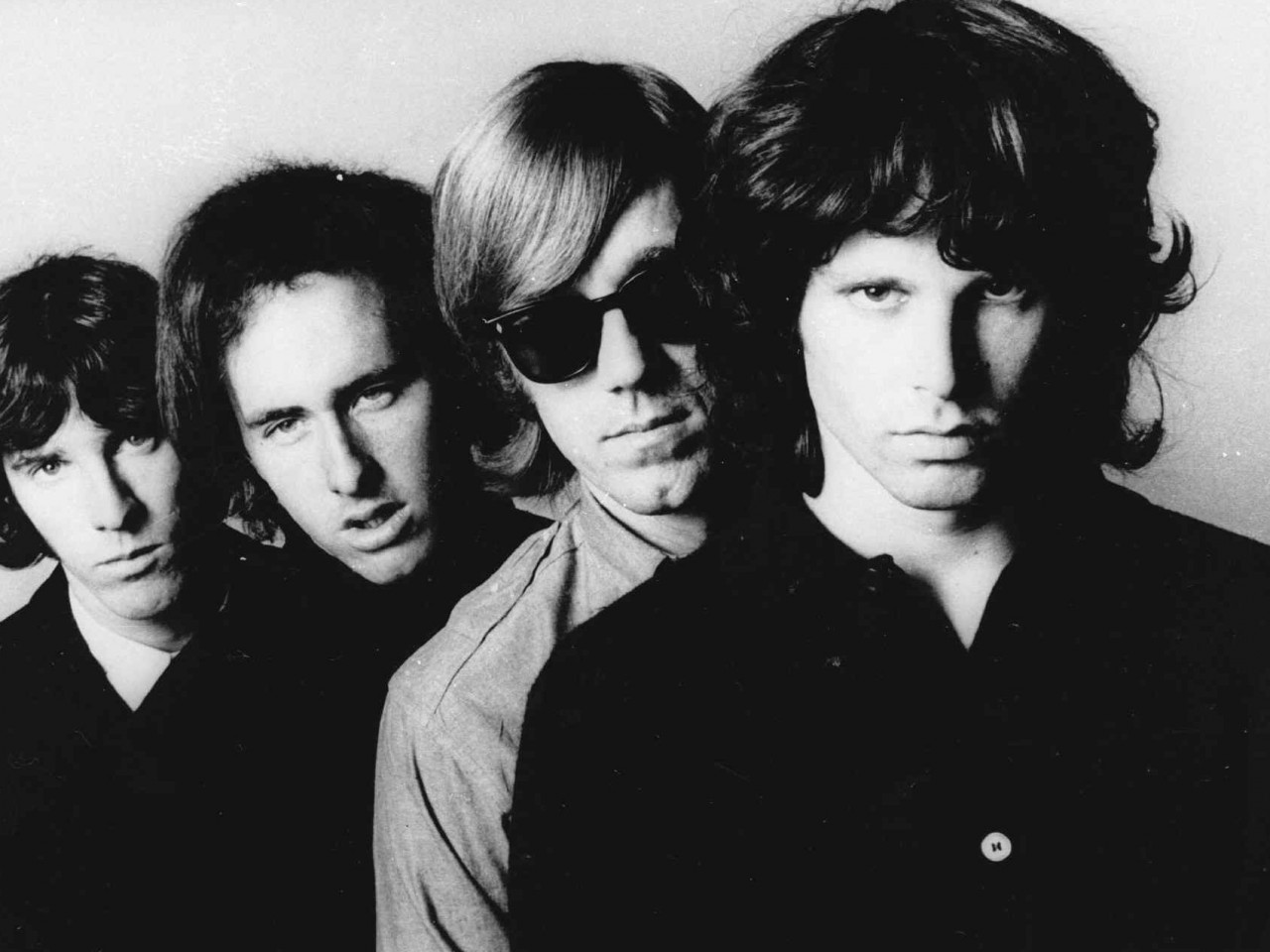
I think it’s safe to say that when most people think of The Doors, the image that comes to mind is the wild-haired, deep-voiced Jim Morrison, the lewdly provocative Lizard King. Morrison, no matter what you think of The Doors’ music, is in the upper strata of true rock ‘n’ roll gods, a boozing, philandering sex symbol with a larger than life stage presence who, to paraphrase Kerouac, burned bright like a roman candle and then was suddenly snuffed out, a member of the infamous “27 Club” of rock stars who died at that age.

The average person on the street probably wouldn’t be able to tell you who Ray Manzarek was. But the keyboardist, who died this week from cancer at the age of 74, was no less crucial to The Doors, and by extension the development of psychedelic rock and ’60s counterculture, than Morrison was.

It’s natural that Morrison got the lion’s share of the fame. He was the face of the band, the screaming maniac howling at the end of Break On Through and The End, the American id come to life on stage. But Manzarek was the backbone of the band, the one who defined The Doors musically. When you think of The Doors, you might picture Morrison, but what do you hear? The tinkling rain of the keys on Riders on the Storm, the baroque carnival opera organ on Light My Fire, the echoing intro of When the Music’s Over. What you hear is Manzarek.

Even when magazines and newspapers ran obits for Manzarek (second from right), he's in Morrison's shadow

Even when magazines and newspapers ran obits for Manzarek (second from right), he was in Morrison’s shadow

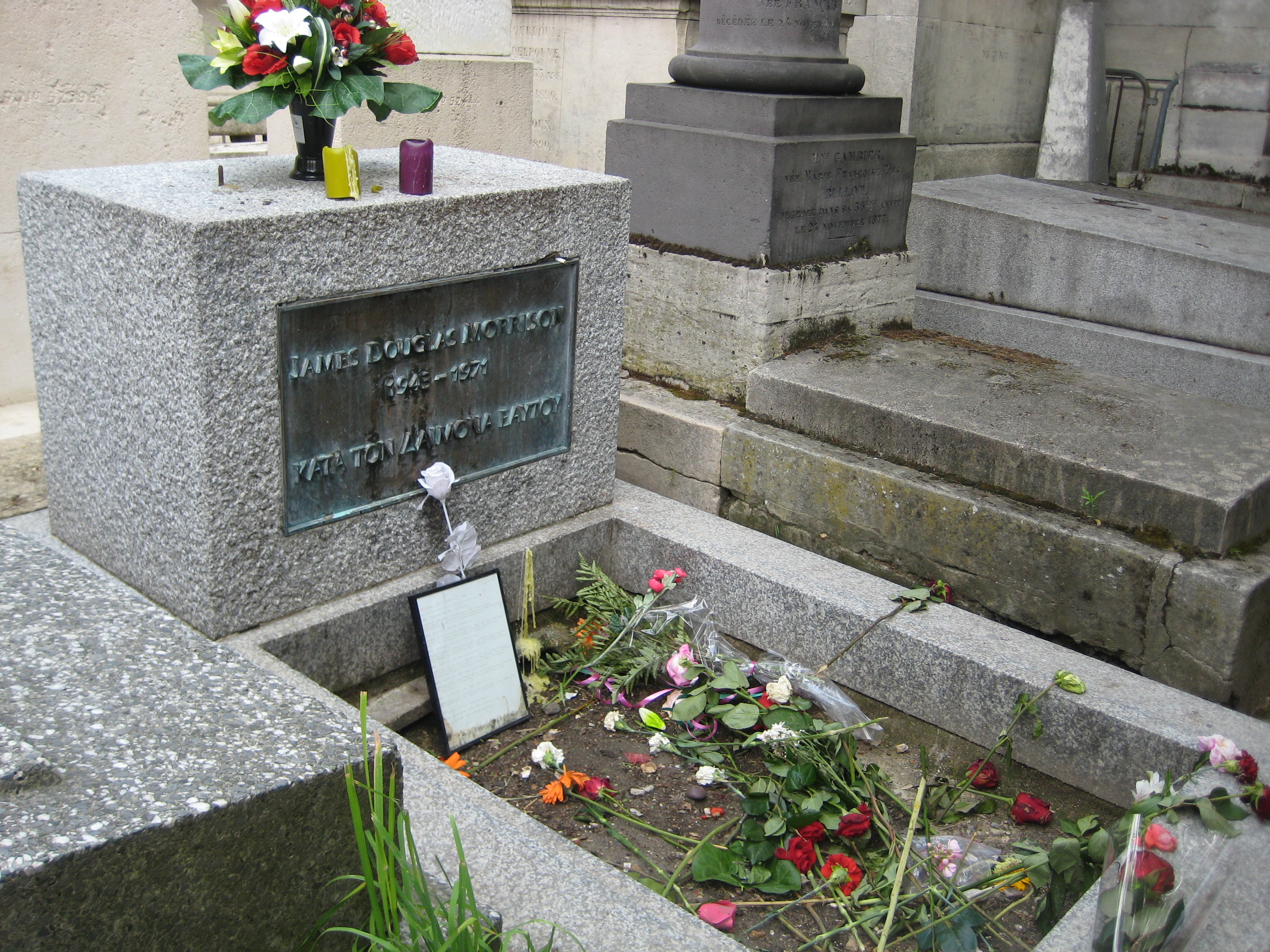
I’m probably as guilty of overlooking Manzarek as anyone. Hell, my whole first paragraph of this entry is about Morrison. The obits published for Manzarek all over the world last week noted Manzarek’s importance, but he didn’t get the true legend treatment, and he won’t. He lived too long for that. People won’t dress up as Manzarek for Halloween. He won’t be buried in the most famous cemetery in Paris, and the caretakers of wherever he’s laid to rest won’t have to put a fence up around his grave to keep people from defacing it and fucking on it. People won’t be putting pictures of Manzarek’s grave in blogposts.

There's a big fence around this, even though I didn't get it in the shot

There’s a big fence around this, even though I didn’t get it in the shot

As long as The Doors are getting airplay on classic rock radio, Morrison will remain the star. But when those songs come over the airwaves (or through the fiber-optic cables or whatever) it’ll be Manzarek, more than anyone else, that we’ll be hearing.

Update: My good buddy and fellow blogsmith Juan Alvarado Valdivia wrote a great response to this post, adding a few thoughts on not only Manzarek and Morrison, but also on the underrated Robby Krieger. Go check it out.

Posted in Music | Tagged , , , | 4 Comments

Why Do People Like Silver Linings Playbook So Much?

Spoiler Alert: I did not like this movie

Spoiler Alert: I did not like this movie

Because I almost never go to the movies anymore (for reasons I’ll discuss another time), I almost never see movies in the theater anymore. As I result, I don’t usually see a film until months after it has been released, reviewed, won awards, had a narrative formed about it, yadda yadda. At the moment I’m working my way through the Academy Award Contenders from this past year. (The Oscars are beyond stupid and do not at all provide a real measure of what was the best film from the past year, but I like to at least see the Best Picture nominees. Except Les Miserables. I’d rather feed my balls to a paper shredder than sit through a three-hour musical. But so far I’ve really liked Argo and Zero Dark Thirty (which I wrote about, among other things, here), been pleasantly surprised by how much I liked Life of Pi, and hated Django Unchained just as much as I thought I would (my disdain for Quentin Tarantino requires its own post)). The Best Picture contender I watched most recently: Silver Linings Playbook.

I went into Silver Linings Playbook with high expectations. I enjoy David O. Russell’s work, and consider Three Kings, I Heart Huckabees, and The Fighter to all be good to excellent films. I like Bradley Cooper. I love Jennifer Lawrence. Robert De Niro playing a bookie, even firmly ensconced in the mailing-in-performances-and-cashing-checks phase of his career, sounds great to me, too. I definitely understand what it’s like to be a crazy, superstitious football fan (I still give opposing kickers the two-finger jinx when they line up for a late-game field goal attempts). And I heard from several people who saw it that it was good.

Unfortunately, the film did not meet my expectations. Not that it was bad–there were things that were good very good about it: I thought Cooper (who I’m pre-disposed to like because he was an English major in college) was really, really good. I thought Chris Tucker in his supporting role was great. I thought the fight scene from the tailgate at Lincoln Field was awesome. And the scene where Cooper finishes A Farewell to Arms and chucks it out the window? I mean, I fucking love that book, but I had the exact reaction when I finished it, as it has one of the most cripplingly depressing endings in all of literature.

But I had a lot of problems with the film. We’ll start with a minor one: When De Niro tells Cooper “We have to win so we can go to the division,” that’s a phrase that no football fan would ever say–you’d say “If we win, we’ll win the division,” or “… so we can go to the playoffs.” I know this is a nitpick, but seriously, if an actor fucks up a line, edit or re-shoot the goddamn scene. I don’t care if it’s Robert De Niro.

Second, I didn’t think J-Law was all that great in the film. She’s not bad, by any means, but I wasn’t blown away by here. And once again, I LOVE JENNIFER LAWRENCE. She’s gorgeous, down-to-earth (seriously, how can you not love someone who gives an interview like this minutes after she wins an Oscar?), and I think she’s a really good actress. Her performance in Winter’s Bone, if you haven’t seen it, is fucking incredible. I even thought she was really good in the last X-Men movie. If actors and actresses had stock-trading prices, hers would be just about the highest in Hollywood. But I don’t think what she did in Silver Linings Playbook was all that impressive, and I don’t think it’s in the same class as what Jessica Chastain did in Zero Dark Thirty.

I know. I'm sorry, J-Law. I still love you.

I know. I’m sorry, J-Law. I still love you.

Finally, and this is the big one (SPOILER ALERT): The ending pissed me off, and if I had a mental illness I would be fucking irate about it. Cooper of course figures out he’s in love with J-Law, and not the wife he’s separated from him, and the last shot, of her sitting on his lap with both of them all lovey-dovey at a family dinner, implies that their falling in love is a magic cure for Cooper’s bipolarity. This is bullshit, and I think it’s disrespectful toward people who struggle with depression, bipolarity, and other mental illnesses. I would expect better from David O. Russell, especially given that his son attended a boarding school for special education students.

So that’s how I feel about Silver Linings Playbook. Did I miss something? Am I totally off base? Take to the comments and tell me what you think.

Posted in Movies | Tagged , , , , , | 5 Comments

On the Dubs’ Playoff Run and What Happens Next

Now that the Golden State Warriors thrilling playoff run has come to an end at the hands of killers of all things fun, the San Antonio Spurs, I thought I’d take a little time to look at what went wrong against the Spurs, what went right this season, and the challenges the Dubs face in their efforts to become a legit championship contender.

What Was the Team’s Downfall?

1) They played the Spurs. I predicted the Spurs would win this series in 5, and while the Dubs stretched it further than I thought they would, and did have a real shot to win the series, they ultimately lost for most of the reasons I thought they would. The most obvious one was the Spurs’ advantages in experience and coaching. I wrote in my recap of the Dubs’ first round upset of Denver that “The clownball Golden State engaged in when they almost gave away Game 6 in the fourth quarter will not fly against the Spurs,” and I was right. They blew a 16-point lead in the final four minutes of Game 1, and in Game 6 at home, they repeatedly committed rally-killing turnovers. Credit to the Spurs; they executed their offense and, after the first two games, came up with a strategy to bottle up Curry and Klay Thompson. They proved to be the sturdier, more battle-tested team (naturally, given their edge in experience) with a superior coach who was better at making adjustments (more on Mark Jackson later).

This screenshot from overtime of Game 4 was my favorite moment of the entire playoffs. Unfortunately, old sourpuss is a better coach than Mark Jackson

This screenshot from overtime of Game 4 was my favorite moment of the entire playoffs. Unfortunately, old sourpuss is a better coach than Mark Jackson

2) Injuries. Part of the reason the Dubs overcame Denver in the first round was because they were less effected by injuries. That was not the case against San Antonio. Tony Parker was hobbled in the second half of the Series, true, but the Warriors had Curry limping around on a bad ankle, David Lee limited to less than ten minutes a night because of his torn hip flexor, and Andrew Bogut becoming steadily less effective as his own surgically-repaired ankle wore down. Even Harrison Barnes missed the fourth quarter of Game 6 after taking a brutal fall on a drive to the hoop. At some point, the injuries were just too much to overcome.

But There’s a Bright Side, Right?

Absolutely. Now that the team’s exciting playoff run is over, we can look at this team and say that Warriors fans have more reason to be optimistic than at any time in the past 20 years. The 2007 “We Believe” team also went on an exciting playoff run, but it was a team full of combustible personalities that predictably imploded in the following years. Before that, you’d have to go all the way back to 1994, when Rookie of the Year Chris Webber, Chris Mullin, Tim Hardaway, and Latrell Sprewell formed the core of a 50-win team. Unfortunately, Webber and Coach Don Nelson clashed so bitterly that both left after the season, and the Warriors spent most of the the next two decades wandering in the wilderness. There’s no reason to think something like that will happen this time, because, in addition to the talent on hand, the current team has great chemistry and a smart management group. Here’s a quick overview of all the things that went right this season:

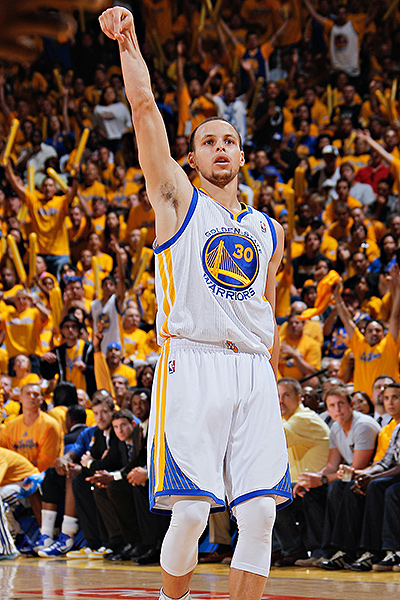
1) Steph Curry became a superstar. Every media outlet on the planet has covered this already, but after the All Star Game (for which he was inexplicably snubbed), Curry began to play like a true star, and in the playoffs he became a superstar who captured the imagination of not only the Bay Area, but basketball fans across the nation. He’s the best shooter in the game today, and already, after just his fourth season, has an argument for being the greatest shooter of all time. And he can still improve.

I am so, so gay for Steph Curry

I am so, so gay for Steph Curry

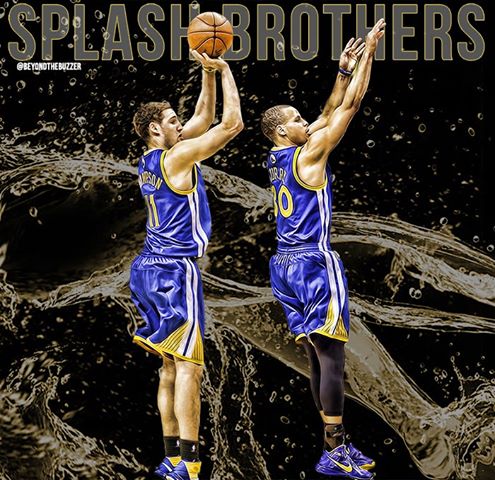
2) Klay Thompson proved he’s a solid starting shooting guard who can work with Curry. I haven’t always been a huge fan of Klay, but he showed in the playoffs that aside from being a dead-eye shooter, he’s a stout defender who can check an opponent’s best perimeter player. The Splash Brothers are the best shooting backcourt in the league, and they have the potential to be the best backcourt, period.

I took this off of someone's facebook page. Thanks, whoever you are

I took this off of someone’s facebook page. Thanks, whoever you are

3) Harrison Barnes showed he’s a building block for the future. Barnes made the all-rookie first team, posting respectable numbers for a 20-year old, and displaying crazy athleticism, especially when he threw down arguably the best dunk in the NBA this year. Then, in the playoffs, he stepped up when David Lee went down, playing more than 40 minutes, scoring more than 16 points, and grabbing more than 6 rebounds a night. He also showed he’s not afraid of the big moment, taking 26 shots in the Game 4 OT victory over the Spurs. He has the potential to be an excellent defender, he showed he can play as a small-ball 4 in the right matchup, and there’s every reason to hope he can be a starter on a championship contender. Again, he is 20 years old: The sky’s the limit. Given that he had a mildly disappointing college career, none of these developments was a given, so it’s definitely something for Dubs fans to celebrate.

Throw it down, young fella!

Throw it down, young fella!

4) Andrew Bogut showed he can be the inside presence the team needs. Bogut played sparingly during the regular season, and was mostly ineffective when he did. But in the playoffs he was a physical beast, cleaning the glass, blocking shots, and generally wreaking defensive havoc in the paint. He’s exactly the player the Warriors need in the middle to balance all of their perimeter scorers, and there’s reason to hope that, after a full offseason of rest and rehab, he’ll be able to come back and provide this sort of play for the whole season next year.

Would you want to take the ball to the rack if this guy was waiting there for you?

Would you want to take the ball to the rack if this guy was waiting there for you?

5) Mark Jackson showed he’s a legitimate NBA coach. I don’t think anyone would argue with this. Is he a championship-caliber coach? More on this in a moment.

Questions for the Future

1) Is this the core of a Championship Contender?

This is the big question, which comprises a bunch of smaller questions, such as:

2) Can Bogut and Curry stay healthy?

This is by far the most important question. They both have chronic ankle issues that the team will have to manage in coming seasons.

3) How much will the young players continue to improve?

Not just Curry, Klay, and Barnes, but also Draymond Green, a blue collar grinder of a player who proved he could defend multiple positions, inside and out, who could even hit an open shot in the playoffs, and Festus Ezeli, who the team will need to play 15 minutes a night in coming years to help spare Bogut. But it’s the development Curry, Klay, and Barnes who will determine if this team is a championship contender moving forward.

4) Whither David Lee?

Did this playoff run show Lee is expendable, even detrimental to the team’s success? He’s a strong offensive player, but as Grantland’s Zach Lowe (who is the best basketball writer in the universe, by the way) pointed out, the team’s offense actually improved without Lee because it put the ball in Steph’s hands more. Furthermore, the Dubs played really well as a small ball team, with Barnes and Green playing the 4 (in particular, Green showed the strength to defend the post, though I can’t imagine he would have been happy guarding Zach Randolph if the Dubs had gotten past the Spurs). And Lee is an atrocious defensive player. Don’t get me wrong: Lee is a good player, but he’s not as good as his numbers make him seem, and he gets paid a TON of money. That last point makes this moot: no one is going to take his contract (due $45 million over the next 3 years), so the Dubs will have to figure out the best way to use him.

5) Will Jarrett Jack and Carl Landry come back?

Jack is a free agent and Landry has a player option for next year that he’ll likely decline in search of a better contract. Both are likely to get nice raises next year, and given the team’s salary cap condition (which they screwed up last year by stupidly wasting their amnesty on someone other than the useless corpse of Andris Biedrins) they probably can’t bring both back. So the question becomes, what do they value more: The ball-handling, scoring, leadership, and (over)confidence of Jack (with whom the fans at the Roaracle have an extreme love/hate relationship) or the toughness and inside scoring of Landry? Given the success the team had with going small in the playoffs, and the high number of minutes D-Lee plays, plus the fact that playing Jack at the 1 and moving Curry off-ball gives them a look they like to use, my guess is that the team will prioritize bringing Jack back. But it also depends on what kind of offers those guys get from other teams this offseason. It’s also worth noting that the Dubs will get backcourt help next year with the return of Brandon Rush, a solid perimeter defender and 3-point shooter, from the knee injury he suffered at the beginning of this season. There’s also the next question:

6) Can they move expiring contracts to get another contributing player?

Andris Biedrins and Richard Jefferson, who were both non-contributors this year, are going into the final years of their contracts. The team’s salary cap figure would look a lot better without the combined $20 million those guys are taking up, but what are those expiring contracts worth on the trade market? Can they move either of those guys for more help, either in the offseason or the trade deadline? Can they move some of that money in exchange for a solid bench big to replace Landry? Or will they hold on to those numbers and make a splash in free agency after next year? It’s a huge, huge question.

7) Is Mark Jackson a championship-caliber coach?

He’s respected around the league. The team clearly loves him and plays hard for him. I’m not personally a fan of the whole reverend schtick, but if it works, whatever. He’s helped given the team league-wide credibility, and he out-witted George Karl in the first round of the playoffs. But it bothers me when I see him spending a timeout before a final possession of a playoff game giving the team a sermon rather than drawing up a play, and then on the ensuing series the “play” ends up being Jarrett Jack doing an iso and chucking a 22-foot fall away. Between that and some of the weird lineups he threw out during the playoffs, not to mention running Steph into the ground (He played 58 minutes in Game 1 against the Spurs. I need to repeat this: He played 58 minutes in Game 1 against the Spurs! He never came out of the game! He has fucking papier-mache ankles!), I think Jackson, while he’s shown strengths as an NBA coach, has also shown that he has to continue to improve as much as his young team does.

8) Where does the team fit in the Western Conference landscape?

One would assume that Oklahoma City, with Russell Westbrook back healthy, will continue to be a Western Conference power. Memphis will be right there as well, as they’ll be bringing back a team that is going to make the NBA Finals (I’d bet anything they beat the Spurs in the Conference Finals), and may even have a chance to improve. The Spurs will keep being good because clearly they’ve made some kind of deal with the devil, but if this same Spurs team played this same Warriors team in the playoffs again next year, I would absolutely pick the Dubs, now with playoff experience, to win. Denver is an intriguing team that is still trying to figure out if they can be a true contender without a superstar–but they Dubs have already proven they can beat them. The Clippers are full of question marks–Will CP3 leave? Will they get a real coach? Will Blake Griffin ever be more steak than sizzle?–and I honestly think that right now the Dubs are better than them anyway. The Lakers have even more questions, with Dwight Howard no guarantee to return and Kobe likely to miss most of next season with his Achilles injury. The Rockets are also a team on the rise, and I have a feeling they’re going to end up with Dwight Howard (via free agency) or Pau Gasol (via trade). Can the Mavs make a free agent splash and bounce back? Can Minnesota get Rubio and Love on the court together?

Basically, if the Warriors keep Curry and Bogut on the court, get continued improvements from their young players, and can add a bit more depth upfront via trade, I can see them winning 50 to 55 games next year, being somewhere in the 4-5 seed range for the playoffs, and being a team that can challenge for the Conference Finals–especially since they have the best homecourt advantage in the NBA. Bear in mind that they’re probably 2-3 years away from their peak as a collective team–a peak they should be hitting right around the time the Miami Heat begin to show their age. If things go right, the Dubs have the core of a team that we could absolutely see battling Oklahoma City in the Conference Finals on a semi-regular basis and–HOLY SHIT I can’t believe I’m saying this–I think they really have a shot to win an NBA championship sometime in the next five years.

Imagine the NBA Finals being played here. Just imagine it.

Imagine the NBA Finals being played here. Just imagine it.

Posted in Basketball, Sports | Tagged , , , | 3 Comments

Desert Island Album #4: In the Aeroplane Over the Sea

In_the_aeroplane_over_the_sea_album_cover_copy

The album cover:

An old-time sort of drawing of a faceless girl waving goodbye to a boy. Behind them is the sea, in which we see several other children either swimming or drowning, depending on your interpretation. The cover was designed by Jeff Mangum, the dominant creative member of the band, and Chris Bilheimer, who also designed album covers for R.E.M. (Mangum lived in Athens, Georgia, much like R.E.M., when he wrote the album.) Mangum was obsessed with The Diary of Anne Frank, and Frank’s presence hovers over many of the songs on In the Aeroplane Over the Sea. As such, it’s hard to see the girl as anyone but Frank, an interpretation that, for obvious reasons, would lead one to believe the children behind her are drowning.

The first sound you hear:

The strike of an F-chord on an acoustic guitar, as Mangum launches into the simple yet beautiful three chord progression of The King of Carrot Flowers Pt. 1. This album was released in 1998, but I discovered it in 2004 or 2005, when I was working part time at an indie bookstore in the Bay Area. My good friend Brian, who worked the Saturday night shift with me, put In the Aeroplane Over the Sea on the store’s stereo, and it took less than five seconds for me to look over at him and say, “What is this? I love this.”

The last sound you hear:

The album ends with Mangum slowly strumming the outro of Two-Headed Boy Pt. 2 and singing, “Don’t hate her, when she gets up to leave.” Mangum’s voice, raw and nasal and just barely in key, seem to hang in the air long after the song fades out, the words a goodbye to the girl (Anne Frank?) that the Two-Headed Boy (Mangum?) is in love with.

Track by Track:

King of Carrot Flowers Pt. 1 features that beautiful guitar cut, backed from the second verse on by a strangely haunting accordion (I think). The lyrics paint an evocative picture of a fractured adolescence, redolent with familial dysfunction (“Your mom would stick a fork right into daddy’s shoulder/And dad would throw the garbage all across the floor”) and sexual longing (“As we would lay and learn what each others’ bodies were for). The best known part of the song is perhaps the final vocal note, when Mangum sings “Dad would dream of all the different ways to die/Each one a little more than he could dare to tryyyyyyyyyyy.” It would be obnoxious of me to put in the properly representative number of y’s there, because Mangum really does seem to hold the note forever.

That two-minute masterpiece leads, with no pause between tracks, into the album’s most divisive song, The King of Carrot Flowers Pts. 2 & 3, a song which begins with Mangum singing, at extreme volume, “I love you, Jesus Christ/Jesus Christ I love, yes I do.” I always took the lyrics for being ironic, but according to the excellent 33 1/3 book about the album, it’s actually a genuine expression of Mangum’s faith. Following the intro, the song breaks into a fast, heavily distorted romp full of psychedelic imagery, including melting dogs. To be honest, I’ve never really known what to make of this tune, accept that it fits into the dichotomy of innocent faith and sexual desire that permeates much of the album.

Of course, what follows is the title track, perhaps the most beloved Neutral Milk Hotel song (when I saw Mangum play in Oakland last year, it was the song that got the loudest audience response–and this was an audience that sang worshipfully along with every song). In the Aeroplane Over the Sea starts with a simple acoustic guitar strumming a waltz (it’s somewhat similar to the Beatles’ You’ve Got to Hide Your Love Away), and as with The King of Carrot Flowers Pt. 1, it’s augmented by several interesting instruments–pipes, some kind of horn. The lyrics are sweet (What a beautiful face/I have found in this place/That is circling all round the sun”) but come to be cryptic (“And one day we will die and our ashes will fly from the aeroplane over the sea.” It’s the first song that explicitly references Frank (“Anna’s ghost all around/Hear her voice as it’s rolling and ringing through me”) and the beautiful face Mangum is trying to hold on to is almost certainly hers.

Anne Frank

Anne Frank

The next song is the punk influenced Two-Headed Boy, which features Mangum heavily pounding acoustic chords as he paints a lyrical picture of lust: “We will take off our clothes/And they’ll be placing fingers through the notches in your spine.” The song gradually slows and turns sad, as the boy’s lover ends up,”floating and choking with her hands across her face.” Two-Headed Boy leads, again seamlessly, with no pause, into The Fool, a horn-driven instrumental which recalls, for clear reasons, a funeral dirge.

After The Fool fades out, we get the quickly struck first acoustic chords of one of the album’s finest and most famous tracks, Holland, 1945. This is a clear reference to Anne Frank, who was Dutch and who died in Bergen-Belsen in 1945, a few months after her family was discovered hiding above her father’s factory in Amsterdam. It’s an uptempo but tremendously sad song that begins “The only Girl I’ve ever loved/Was born with roses in her eyes/But then they buried her alive/One evening 1945/With just her sister at her side/And only weeks before the guns/All came and rained an everyone,” a reference to Frank dying shortly before the allies liberated Bergen-Belsen. I can’t really talk rationally about this song–I’m sorry, but if you don’t like it, you’re not a good person.

The high-minded reference to Frank gives way to Communist Daughter, a song which is less than two minutes long and will have you singing along the refrain, only to have you realize you’re walking down the street singing “Semen stains the mountaintops.” It’s another instance of Mangum moving from his idealization of faith and innocence (Holland, 1945), to sexual impulse.

The next track is the epic, eight minute Oh Comely, a song with aggressively sexual lyrics early on (“Your father made fetuses, with flesh-licking ladies” … “The movements were beautiful all in your ovaries” … “Smelling of semen all under the garden”). There’s then a short interlude before the lyrics return, this time with a distinct Anne Frank overtone: “I know they buried her body with others/Her sister and mother and 500 families/And will she remember me 50 years later/I wished I could save her in some sort of time machine” that gives way to another interlude, this one with another horn instrumental, before the final verse, once again with sexual content: “But now we move to feel/For ourselves inside some strangers stomach/Place your body here/Let your skin begin to blend itself with mine” before the outro. It’s such a bizarre, unique song that I really can’t think of an equivalent in rock music.

The next song, Ghost, once again refers to Frank with the lyrics, “And she was born in a bottle rocket, 1929 … I know that she will live forever/She won’t ever die”. It’s another fuzzy song, full of sub-lyrical Mangum wailing and yet more horn instrumentals.  This leads into Untitled Track, a bagpipe (among other things) instrumental, which is just so bizarre yet at the same time strangely appropriate.

The album closes with Two-Headed Boy Pt. 2, a beautiful, plaintive acoustic song reaching for the comfort of a child with his parents (“Daddy please hear this song that I sing/In your heart there’s a spark that just sings/For a lover to bring a child to your chest that could lay as you sleep”). A later verse brings up the image of a lost lover (“And in my dreams you’re alive and you’re crying/As your mouth moves in mine, soft and sweet/Rings of flowers ’round your eyes/And I’ll love you for the rest of your life when you’re ready”). Interestingly, the flowers around the eyes image is one Mangum used in one of the earlier songs about Anne Frank, Holland, 1945. The song continues with a cry for God (“When we break we’ll wait for our miracle/God is a place you will wait for the rest of your life”) and closes with a bizzare yet haunting final verse: “Two headed boy she is all you could need/She will feed you tomatoes and radio wires/And retire to sheets safe and clean/But don’t hate her when she gets up to leave.”

The signature track:

It’s neck and neck and neck between The King of Carrot Flowers Pt. 1, In the Aeroplane Over the Sea, and Holland, 1945. The last is probably my favorite, but given that it’s the title track and it got the loudest response from the crowd when I saw Mangum, I’d have to go with In the Aeroplane Over the Sea.

The signature lyric:

A tough choice, given the wealth of strange psychedelic images and the fact that there are several songs on this album that have completely captured the imaginations of a devoted following. I’ll defer to Mangum, who when I saw him live, simply started strumming the chords to In the Aeroplane Over the Sea and let the audience sing the first few lines: “What a beautiful face/I have found in this place/That is circling all round the sun/What a beautiful dream/That could flash on the screen/In a blink of an eye and be gone from me/Soft and sweet/Let me hold it close and keep it here.”

But if I’m being honest, my favorite lyric is every single word in Holland, 1945. I won’t reprint them here, but it’s perfect.

The essence of the album:

It’s one of the strangest albums you’ll ever find, in part because its creator is a weird dude. A fragile, sensitive native of a small Louisiana town, he freaked out following the success of In the Aeroplane Over the Sea and disappeared from the public eye for more than ten years, neither recording nor performing, until he reappeared in October 2011 by playing a show for the Occupy Wall Street Protestors in New York.

The album is so interesting because it illustrates a mind vacillating between sensitivity and aggression, innocence and lust, faith and sadness. Mangum seems like he had some tie-ups about his sexual impulses (there’s a song called Song Against Sex on NMH’s first album, and it’s not too hard to figure out what the term “two-headed boy” is referring to), and he also seems like he’s trying to reconcile these impulses with feelingw of pure admiration and love for the innocent victim Anne Frank. It’s a fascinating, disturbing dichotomy that plays out in a fuzzy, lo-fi, horn infused musical atmosphere.

Aside from these interesting elements, I connect with the album on a very personal level: My grandparents were Holocaust survivors. I visited the Anne Frank House in Amsterdam in 2009, and to this day it is one of the most surreal, indescribable, horrible, beautiful, important experiences I’ve ever had. I bought a picture of Anne Frank at the museum, and it’s still on my wall today. There’s a lot of literature and film related to these sort of experiences, but very little music that addresses it. I don’t actually want there to be any more: I don’t want Justin Bieber or Taylor Swift telling me how to feel about Auschwitz. But it’s nice to be able to put on Mangum’s strange, gorgeous opus and know that someone who has no familial connection to the Holocaust can identify with it and be deeply moved by it, to the point where he can create his own deeply moving meditation on it. That, beyond any other reason, is why In the Aeroplane Over the Sea is one of my desert island albums.

Find all my Desert Island Albums here.

Posted in Desert Island Albums, Music | Tagged , , , , , , , , | Leave a comment

On Giving Public Readings

litcrawlcollagerev

I’ve been doing this writing thing long enough that I’ve had a few occasions to read my work in public. It’s a daunting experience, and I thought I’d talk a bit about what it means to me to read my work to an audience.

First of all it’s a crucial part of any writer’s career. I had a professor in grad school who thought it was so important, she made everyone in her classes read two to three pages of new work aloud every single week. You see your work differently when you read it out loud. You catch mistakes, you notice areas of resonance or significance or emphasis you may not have caught before. Most importantly, you connect with the rhythm of the piece. And aside from all that, she made the pragmatic point that, if you want to be a working writer, you have to get used to reading your work in front of people.

As it turns out, once I get up in front of a crowd, I’m actually a pretty good live reader. But for the entire day leading up to an event, I am a quivering, terrified, dysfunctional wreck. Even though I’ve done this ten or fifteen times, I still can’t eat all day before I give a reading, and I inevitably need a couple of whiskeys to ease my nerves before I get on stage.

On the plus side, participating in readings that come with a theme or a prompt has led me to create some really interesting work that I would not have otherwise. If you don’t believe me, check out the first and especially the second reading I did for Write Club San Francisco.

Now, you might be about to ask, “Justin, is this blog post a long-winded way of publicizing the reading you’re giving this weekend?” OF COURSE!

I got invited to read at Lit Crawl Brooklyn this year, something I’m beyond giddy about, especially since I lived in San Francisco for years and never got invited to read in the Lit Crawl in the Mission, even though the Bay Area literary community is famous for supposedly being open and welcoming. (I have thoughts on this that would get me in trouble, so let’s just move on.) I’m reading on Saturday at Grumpy Bert (82 Bond Street in Boerum Hill) during Phase I, between 5 and 5:45 p.m. The reading is hosted by Lost Lit, and there will be food and drink afterwards, so come down and support the literary arts, and of course have some drinks with me. What could possibly be more fun?

UPDATE:

The reading went really well! Thanks to everyone who came out. Here’s a picture:

What it looks like when Justin gives a reading

What it looks like when Justin gives a reading

Posted in Writing | Tagged , , | Leave a comment

The World’s Greatest Oreo

2-oreos-and-milk

The other day I was in my office building elevator with two young women who were eating single-serving packages of Oreo cookies. One of them said, “the best Oreo is a free Oreo.” Now, I don’t know where they got their free snacks, but I know that there is an Oreo better than the ones they were eating. Because I’ve seen the World’s Greatest Oreo.

During my sophomore year of college, one of my roommates decided to aggressively let himself go. No exercise, no dietary restrictions (except for one time when he inexplicably and hilariously drew the line at cooking eggs with butter instead of cooking spray–but I digress). He basically spent the whole year saying, “Fuck it, I don’t care if I get fat.” This sort of creative commitment is how you get something like the World’s Greatest Oreo.

My roommate’s moment of inspiration looked like this: He took a large stein mug, and put most of a 30-pack of Oreos into it. He then poured milk over the cookies, filling the mug nearly to the brim, sealed his concoction with plastic wrap, and placed it in the fridge to let the Oreos marinate.

Ingredient 1

The Receptacle

Ingredient 2

Ingredient 1

Ingredient 2

Ingredient 2

The next day (!) he unveiled his sickly marinated cookie stew and ate it with a spoon, like breakfast cereal. He offered me a taste, but I couldn’t bring myself to try it. I was terrified.

I wish I had a photo, but this all happened twelve years ago. My former roommate now vacillates a bit in terms of taking care of himself–he occasionally hits the treadmill, but don’t try to sneak a combo platter past him–and he’s generally done well for himself: wife, kid, job, house, yadda yadda. After the women in the elevator reminded me of the World’s Greatest Oreo, I texted him and asked if he remembered his creation. His response: “Of course. It was the fattest thing I’ve ever done.”

Well met, sir.

Posted in College, Food, Humor | Tagged , , , , | 1 Comment

Desert Island Album #3: Elliott Smith

Elliott Smith

The album cover:

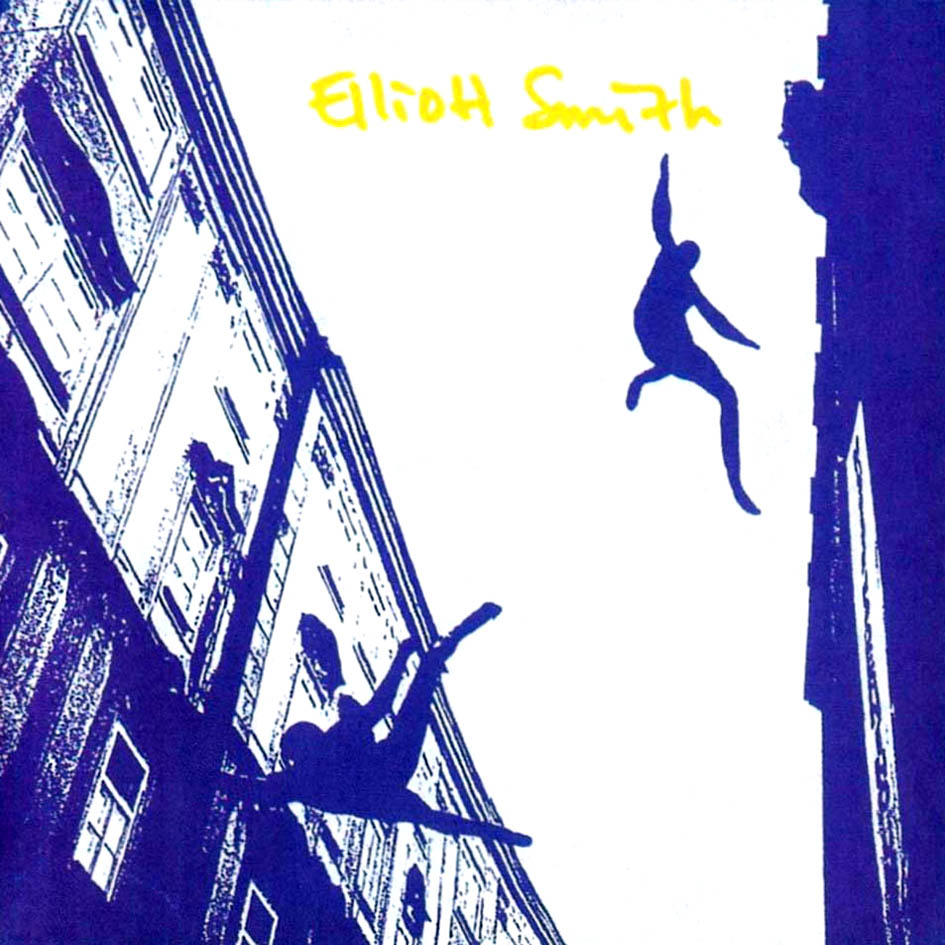
A bleak, nearly monochromatic image of a couple of figures falling (perhaps having jumped?) from a building. Elliott Smith’s name appears to hover in midair in Smith’s handwritten script, barely legible due to its pale yellow color. The image sets the tone for the album, a collection of seriously depressing songs which Smith, 25 at the time, recorded mostly by himself while living in Portland. Kill Rock Stars, an indie label that has distributed albums for Sleater Kinney, The Decemberists, and a number of other musicians from Portland and Seattle, released Elliott Smith in July 1995. The self-titled album is Smith’s second as a solo artist, following Roman Candle, and it was released before Smith became famous thanks to Gus Van Sant using a few of his songs in Good Will Hunting. (Which led to this fabulously strange performance at the Oscars. By the way, Smith lost Best Original Song to Celine Dion and the song from Titanic. The lesson as always: The Oscars are dumb.)

It’s hard to discuss Elliott Smith without getting into the depressing stuff. He was an alcoholic and a heroin addict, and the songs on this album in particular are littered with references to drinking and shooting up. Elliott claimed that the imagery was meant to be more symbolic than to be taken literally as autobiography, but we write what we know, right? And of course, Elliott did eventually commit suicide in the painfully poetic way of stabbing himself in the heart. (Maybe. Many of Smith’s friends believe he was stabbed by his girlfriend, and the LAPD never closed the case. For what it’s worth, I tend to think that if anyone out there was a suicide risk, it was Elliott Smith. I mean, look at that album cover.)

The first sound you hear:

The pounding strum of Smith’s insistent acoustic chords on the album’s most famous track, Needle in the Hay. You can hear a bit of fuzz in the background, indicative of the lo-fi recording. Hear it for yourself (along with the entire rest of the album) here.

The last sound you hear:

A slowly strummed, pretty acoustic chord that ends The Biggest Lie. (Note: normally I try to link to every track in an album, but since I just gave you the whole thing, this time I’m not going to bother. But, you should know there are tons of great videos of Smith performing these songs live, like this, and you should totally spend the rest of today listening to as many of them as you can.)

Track by Track:

Much as the the album cover and its reference to falling and possibly suicide begins to set the tone for what’s to come, the lead track, Needle in the Hay, takes the listener to a dark place. It’s darkly beautiful, mind you, with that acoustic guitar that’s almost but not quite playing a punk riff, to Elliott’s whispered melodic vocals. But the lyrics are disturbing, a tale of a damaged, drugged-out boy “strung out and thin/trying to cash some check” who betrays distrust of friends “who don’t have a clue” and parents who “ought to be proud that I’m getting good marks.” I don’t want this whole write-up to be a meditation on Elliott’s drug problems or his suicide, but it has to be mentioned again here because Needle in the Hay is perhaps most famous for providing the soundtrack to the this scene in The Royal Tenenbaums.

Track two, Christian Brothers, takes the anger of Needle in the Hay and ramps it up, stripping away the poetic beauty of the previous track for a more naked aggression, with lyrics like “fake concerns is what’s the matter, man/and you think I ought to shake your motherfucking hand,” and the refrain, the drawn out “nightmares become me, it’s so fucking clear.” The title of the song is a reference, of course to Christian Brothers brandy.

The alcoholic theme continues with Clementine. The song is much slower, a lullaby for a passed out drunk: “They’re waking you up to close the bar.” It’s a piece of clever songwriting, as the narrator hears the bartender singing “Clementine” as he closes up shop, and once he’s removed from the bar, Elliott sings, “Oh my darling/Oh my darling/Oh my darling, Clementine,” though in an entirely different melody from the original, before finishing with the sad reply, “Dreadful sorry, Clementine.”

Track four speeds up with another piece of inspired, angry songwriting, Southern Belle. The song features a fast picked, almost out of control intro, with the vocals coming at first in Elliott’s classic near-whisper, with the lyrics “Killing a southern belle/Is all you know how to do/That and give other people hell/It’s what they expect from you too.” At first glance, the lyrics again appear to be from the perspective of a disenchanted young man, feeling isolated from the southern town where he lives. But a deeper reading reveals something more sinister (yes, more sinister than the notion of murdering a debutante). When you consider that Smith moved from Portland to Dallas as a child when his mother married his stepfather, and that Smith claimed that he was sexually abused by his stepfather, the lyrics: “How come you’re not ashamed of what you are/And sorry that you’re the one she got” take on further power. In this reading, the Southern Belle being killed is actually Smith himself. (Elliott had a tattoo of Texas on his arm, about which he said: “I didn’t get it because I like Texas, kind of the opposite. But I won’t forget about it, although I’m tempted to because I don’t like it there.”). Kind of gives some insight into why he was so fucked up, huh?

The next track is Single File, which begins with a haunting, echoing electric guitar played over a medium fast strummed acoustic guitar. The verses are classic disillusioned Smith lyrics, with lines like “There’s a price you’ll pay for/Trying hard to become whatever they are/and say whatever they say.” The chorus again addresses an “idiot kid” who’s “arm’s got a death in it,” a reference to either drugs or the threat of violence.

Track Six is the slow, lovely Coming Up Roses, which features poetic yet disturbing lyrics like “The moon is a sickle cell/It’ll kill you in time/Your cold white brother riding your blood/like spun glass in sore eyes,” which evoke the moon as both a beautiful and threatening symbol. The chorus, “You’re coming up roses everywhere you go,” seems ironic to me.

We’re now in the slow, quiet, middle stretch of the album, which continues with Satellite, a fingerpicked, almost whispered song that features the great lyric “Cause your name’s a drop of ice in my vein,” and then Alphabet Town, a blue harmonica-laced track about feeling lonely in Smith’s hometown of Portland (The streets in much of downtown Portland are named in alphabetical order, from Burnside to Couch to Davis, etc. (they also–non sequitur alert!–provide the names for several Simpsons characters: Flanders, Lovejoy, and Quimby)). I used to love to listen to Alphabet City while I drove in the rain, remembering the time I spent in Portland.

The album speeds up with the ninth track, and my personal favorite, St. Ide’s Heaven. It’s a fast tune on which Elliott strikes power chords while he sings, “Everything is exactly right/When I walk around here/Drunk every night/With an open container from 7-11/In St. Ide’s Heaven.” It’s a song about getting drunk and high (the chorus is “High on amphetamines/The moon is a light bulb breaking”), but instead of being downbeat, it’s defiant, gleefully flipping the bird at anybody who would judge you for your delinquency.

Elliott dials down the tempo for the last three songs. Track ten is Good to Go, a story of following a “low riding junkie girl” around New York, with the sad refrain “I wouldn’t need a hero, if wasn’t such a zero/Good to go/All I ever see around here is things of hers that you/Left lying around,” and the sadder closing line, “All I ever see around here is/I’m waiting for something that’s not coming.”

Track Eleven is the ghostly The White Lady Loves You More, a heroin song on par with anything Lou Reed ever wrote, and the final song on the album is The Biggest Lie, a ballad in which Smith  plaintively sings, “Oh and we’re so very precious you and I/And everything you do, makes me want to die/I just told the biggest lie.”

The signature track:

My favorite, and most of my friends who are hardcore Elliott fans concur,  is St. Ide’s Heaven. But because it’s the most famous tune, it leads the album, and sets the tone for the whole record, Needle in the Hay is pretty clearly the signature track.

The signature lyric:

In part because of the impressionistic quality of the songwriting, I don’t know that the albums has a singular signature lyric, but there are two that stand out to me. The first is the opening of St. Ide’s Heaven, which is so good that even though I already quoted it once, I’m going to again:

“Everything is exactly right
When I walk around here, drunk every night
With an open container from 7-11
In St. Ide’s Heaven.”

The second is the final verse of Needle in the Hay:

“Now on the bus
Nearly touching this dirty retreat
Falling out 6th and Powell a dead sweat in my teeth
Gonna walk walk walk
Four more blocks plus the one in my brain
Down downstairs to the man
He’s gonna make it all OK
I can’t beat myself
I can’t beat myself
And i don’t want to talk
I’m taking the cure so I can be quiet
Whenever i want
So leave me alone
You ought to be proud that I’m getting good marks.”

That last line in particular is just killer, the double entendre of marks meaning either grades in school or trackmarks in a junky’s arm.

The essence of the album:

Elliott’s albums tend to be split into two categories: The early ones he recorded by himself in Portland, composed of acoustic guitar, vocal, and little more (Roman Candle, Either/Or), and the later ones he recorded in New York and Los Angeles studios that feature lush, Beatles-influenced multi-instrumental arrangements (XO, Figure 8). Elliott Smith is obviously in the former category. It’s a simple and beautiful album, although it can be a hard one to listen to. And it’s been a very hard one for me to write about. I don’t want to focus on the depressing aspects of the songwriting, but I kind of can’t help it, and to discount that element would be dishonest anyway. I’m not going to stab myself in the heart with a kitchen knife, but I can be a pretty fucked up, depressed person, and a big part of why this album speaks to me is because it is so fucked up and depressing. I trotted this line out last week when I was talking about Ryan Adams, but my favorite songs are sad songs, because when you’re sad, nothing makes you feel better than listening to a sad song and knowing you’re not alone, knowing that Elliott Smith knows how you feel.

I also love this album because it’s imbued with a sense of place. These songs feel like Portland (a city where I lived, albeit briefly, in the early aughts); not the cutesy hipster Portland we see in Portlandia (don’t get me wrong, I love that show, but you know what I mean), but the dark, gritty, rainy, sketchy Portland of Drugstore Cowboy. That’s my Portland. Hell, that’s my world. And nobody wrote better songs about it than Elliott Smith. RIP.

A final note: If you liked this and want to learn more about Elliott, go check out Sweet Addy. It’s a wonderfully curated site that’s bursting with love.

Find all my Desert Island Albums here.

Posted in Desert Island Albums, Music | Tagged , , , , , , , , , | 4 Comments

I Love You More

My favorite Beatles song is In My Life. I love the song because, even though it’s a love song, it has a melancholy feel, as John Lennon recalls places, friends, and lovers from his childhood, things he’ll never forget, but whose meaning has changed because he’s fallen in love. What makes the song great is its universality—most people have experienced a feeling like this at some point, when a new love comes into your life, bringing bright new colors with her and reducing everything that was there before to black and white.

Rubber Soul, the album on which In My Life appears

Rubber Soul, the album on which In My Life appears

We usually associate John Lennon with Yoko Ono, his longtime wife. I’d guess that if you asked most people my age, who weren’t born until after John’s tragic death, they would guess that the “You” In My Life is addressed to is Yoko. Except it’s not. John met Yoko in 1967; In My Life was written and released in 1965, while John was married to his first wife, Cynthia, an art school classmate he married in 1962 after he got her pregnant. John and Cynthia didn’t have a good marriage. He was physically abusive and serially unfaithful, and he eventually left her for Yoko.

Does knowing these facts change the way we listen to In My Life? Does it matter that John wrote what many consider to be his greatest love song when he was involved in an unhappy marriage that ended less than three years later?

***

Lara in Hawaii in 2008

Lara in Hawaii in 2008

I met Lara at the beginning of my freshman year at UC Santa Barbara. We were friends throughout college, but never became romantic, in part because she always had a boyfriend, in part because I was an alcoholic who no one in her right mind would want to date. She graduated a year before I did, and enrolled in grad school at UCSB, but I rarely saw her that year, and halfway through it I found out she had dropped out and moved home to the Bay Area. This seemed very unlike her: She was a perfectionist, had been nominated for the award given to the top student in her graduating class. Not in her department–in her entire graduating class. I asked around, and found out through a mutual friend that she had Cystic Fibrosis, a fatal lung disease she had hidden from all but her closest friends and family, and that she had gone home because her health was failing.

I got back in touch with her, and when I graduated and moved home—to the town next to Lara’s—we began to spend a lot of time together.

I’d been In Love with women before. Being In Love is easy. It’s not consensual. You don’t have to know someone to be In Love with her. Usually, when you’re In Love, what you’re In Love with is the idea you have of a person, not the actual person herself.

But to actually Love someone is different. You can’t love a person without knowing her deeply, without being willing to sacrifice a part of yourself for her, and have her be willing to do the same for you. I wasn’t obsessed with Lara the way I’d been with some women. Instead, I felt a profound sense of loyalty to her. I wanted to help her through her hard times. That isn’t to say we became a couple because she was sick—I’d already liked her for years. Just that her illness, rather than being a barrier, was something that brought us closer, a challenge that we faced together. Some people said it was heroic of me to go through it with her, but I didn’t feel that way. If you really love someone, you stay with her through the good and the bad, right?

Not that it was easy. We had to live at our respective parents’ houses–I was a bookstore clerk making ten bucks an hour, she was on disability, too sick to work. She attempted graduate school again, and I moved to Portland, Oregon with her–only to move back after one semester because of her deteriorating health. She was incredibly tough about the illness–she refused to get a Disabled parking sticker for her car, though she could get short of breath walking even a block–but by the end, she was doing more than three hours of medical treatments a day, sleeping more than ten hours a night, and using a portable oxygen tank at all times. I knew she didn’t have a lot of time left.

But in June 2006, two weeks after my twenty-fifth birthday, a few months shy of our three-year anniversary, she received a life-saving double lung transplant at Stanford Hospital. Her recovery from the surgery was long and loaded with complications, both physical and psychological. The months after the surgery were, incredibly, even more difficult than the ones preceding it. But a year after the transplant she was as healthy as she’d been when I first met her, before I had any idea about the disease. This was great, but it was also difficult. The old bond of her illness was gone. She complained when I tried to help her with things, like carrying groceries, saying I was treating her like she was still sick.

With her health relatively strong, she took a third try at graduate school, at the same time I enrolled in my MFA program. More cracks started to show. I would be on campus all day teaching or tutoring or going to class, and even when I was at home I was always reading or working on my novel. For five years, she’d been the most important thing in my life, but I had a shot to chase my longtime writing dream, and that had to be my first priority. To make matters worse, I made new friends at school, and I wasn’t good about including her when I hung out with them. Some of these friends were women, and while I wasn’t unfaithful, I don’t blame Lara for being suspicious. It was all part of how we were growing farther apart.

We worked through a couple of near breakups, each time salvaging the relationship, but we finally split in November 2009, a month after our six-year anniversary.

We talked occasionally after the breakup, sometimes good (I bought her brunch on her thirtieth birthday), sometimes bad (the three-hour phone conversation in which she tearily said at least you won’t have to be there when I die). I finished my MFA the following spring, and shortly thereafter moved to Brooklyn. We didn’t communicate after I moved here—I think we both were trying to move on with our lives—until April of 2011, when I got a long, typo-ridden e-mail from her, telling me that her condition had suddenly crashed. The next day I started getting phone calls from friends on the West Coast—she was in the ICU, intubated and sedated, and probably wasn’t going to make it through the night.

I booked a flight home, hoping she’d hang on, and even though I ended up spending a night at JFK waiting for a delayed flight thanks to a storm, when I got to Stanford Hospital the following day she was still alive. Defiant and stubborn as always, she made small improvements, gave us some hope. Her eyes would open when I talked to her, which I did every day. But she never spoke, couldn’t speak with the ventilator tube in her throat, and after almost a month in the ICU, she passed away. I was in the room, with around a dozen other close friends and family members, when she died.

A few months after her death, most of these same people met at Lara’s favorite place in Santa Barbara, a small beach near campus she would run to in the evenings to watch the sun set over the Pacific. We sprinkled her ashes into the sea, and then we sang a song she had always liked, In My Life, a song about people we’ve loved, some dead, some living.

Sands Beach in Santa Barbara

Sands Beach in Santa Barbara

***

I wonder what John thought about when he heard In My Life years later. Did he come to associate the song with Yoko—about whom he wrote so many other songs—or did it always make him think of Cynthia? Did Cynthia go from being the focus of the song to being one of the people and friends who’d gone before? John expressed regret for the way that he treated her—no small thing, since he could be vicious with friends and partners, including Paul and even Yoko, who he separated from for a time in the mid ’70s—but did he ultimately feel that Cynthia was one of many steps on the way to finding the great love of his life? No matter what he felt, In My Life lives on, and because the song lives on, the love he felt in the moment when he wrote it also lives on.

How will I look back at Lara when I meet the great love of my life? Or was she that great love? Is there even any such thing as a great love of your life? I don’t know. I know that I wish I had made her happy more, that I could take back the times I hurt her, that I had handled the good times as well as the bad, that I could have always been the best part of myself that I was with her sometimes but ultimately not often enough.

But I also know that Lara wouldn’t want me to feel that way. She appreciated my good side, even after she couldn’t live with the bad side any longer. And I know that even though she isn’t here with me anymore, the love that I have for her still is, and always will be. Especially when I hear John sing:

Though I know I’ll never lose affection
For people and things that went before
I know I’ll often stop and think about them
In my life I love you more.

Posted in Grief, Music | Tagged , , , , , , , , , , | 9 Comments

Six Years Later, the Dubs Strike Again

Last night the Golden State Warriors did what I predicted they would not be not be able to, and completed a first round upset of the Denver Nuggets. I thought I’d take a quick look at the series, why the Dubs were able to pull off the upset, and the prognosis for their next opponent, the San Antonio Spurs.

Here’s what I wrote in my NBA Playoff Preview a couple of weeks back: “Denver over Golden State 4-1: I really, really want to believe that the Dubs can test the Nuggets. But Denver has handled the GSWs fairly easily this year, the Dubs don’t have anyone who can check Lawson, and the Nuggets have a huge, huge homecourt advantage playing at altitude. As much as I’d like to see Steph Curry go nuclear, I think Iguodala will make life tough for him and Denver will win in five.”

So, where did I go wrong? Let me count the ways:

1) I misjudged the two teams’ respective homecourt advantages. I think this is understandable. Denver went a league-best 38-3 at home this year, while the Dubs were a solid but much more pedestrian 28-13. It turns out the homecourt advantage was different in the playoffs for two reasons: a) I think Denver benefits from the altitude of their homecourt more in the regular season, when they get the additional benefit of catching teams already tired from road trips and games on back-to-back nights. The effect isn’t as pronounced during the playoffs. Also, it doesn’t matter where you’re playing when a team shoots 65%, as the Dubs did in their game 2 road victory; and b) The Bay Area peeps who pack the “Roaracle” Arena during the regular season make for a good crowd, but during the playoffs, it becomes monstrous, the most intimidating environment for a road team in the entire NBA. Everyone knew that if the Dubs could steal a game in Denver and get back to a Game 6 in Oakland with a 3-2 lead, that Denver would be toast, much as Dallas was when Baron Davis and the We Believe Dubs stomped the Mavs in 2007. This is what came to pass.

2) I thought Denver’s defense, with all their long, quick defenders, would make life difficult for Curry. And they did at times, especially in the fourth quarter of game 6, but the Warriors were pretty good at working to get Steph open looks. Also, Denver didn’t always play their best defenders on Curry–he was being played straight-up by 37-year old Andre Miller when he went impossibly nuclear in the third quarter of game four, a five minute stretch that may or may not have made me question my sexuality:

I just went gay for Steph Curry

— Justin Goldman (@jgoldsbrooklyn) April 29, 2013

3) The injury luck fell on the Warriors’ side. Denver surely missed Danilo Gallinari’s shooting, and Kenneth “Manimal” Faried was limited for much of the series. Not that the Dubs were injury-free. Steph of course had the sprained ankle, but he didn’t miss significant time, and his game is more based on skill than raw athleticism, anyway.
What about David Lee, you ask? I’ll admit, I already thought the series was an uphill battle with Lee, who never played again after tearing his hip flexor in Game 1–outside of Mark Jackson’s silly one-minute attempt to channel Willis Reed last night–and when the Warriors lost the same game in which Lee got hurt on old man Miller’s last-second drive, I really thought the team was toast. It turned out, however, to lead to a strategic breakthrough: the Dubs spent much of the rest of the series playing a small lineup, with Harrison Barnes at power forward and Jarrett Jack sliding into the starting lineup, both changes which were unqualified successes. It was slightly reminiscent of Chris Bosh’s injury in last year’s playoffs leading to Miami figuring out how best to build its offense around LeBron James. The Dubs were able to use this lineup effectively for several reasons: because Barnes stepped up, because Denver was also inclined to go small thanks to Faried’s injury, and because…

4) The Dubs got unexpected performances from their two best players. In this series, Curry and Andrew Bogut became the fearsome inside/outside tandem that the team envisioned when it traded Monta Ellis for Bogut last year. The Dubs achieved most of their regular season success without Bogut, who missed more than half the team’s games while recovering from ankle surgery. Even when he played, his minutes and his athleticism were limited. I would have predicted the Dubs would win the series if I’d known they were getting this Bogut. He was extremely physical as a rebounder and defender throughout the series, he threw down a series of powerful dunks in game 4 to hype up the crowd, including an utter posterization of JaVale McGee. And in Game 6 he scored 14 points and grabbed 21 rebounds (!!) in 39 minutes (!!!)

And what more can you say about Curry? He’d shown flashes during the regular season, most famously dropping 54 on the Knicks at the Garden, and I think most of us hoped this was possible, but how do you predict the moment when a good player becomes a superstar? Grantland’s Brett Koremenos described Curry as a “seat belt factor” player–as in, when he got rolling, it was time to fasten your seat belt. Every time Curry hit a shot in this series, I buckled up, and I usually had good reason. He’s one of the most fascinating, entertaining, unique players in the NBA, and Dubs fans are lucky to have him.

Aside from dominating the games, Steph also took over Twitter. My favorite tweet was this graphic representation of Curry’s shooting range:

Dude can hit from DEEP

Dude can hit from DEEP

So, in their first playoff appearance since 2007, the Warriors were able to pull off a huge first round upset, much as B-Diddy, Captain Jack, and J-Rich did six years ago. Of course, the We Believe team lost its second round series to the Utah Jazz in five games. What’s the prognosis this time? Not a whole lot better. The Warriors face the ultra-experienced, ultra-professional San Antonio Spurs, a team that makes a habit of schooling young whippersnappers like these Dubs. The clownball Golden State engaged in when they almost gave away Game 6 in the fourth quarter will not fly against the Spurs.

Are there reasons for optimism? Yes. The teams split their season series 2-2, each winning both home games (although in the second Dubs win, the Spurs mostly played their scrubs). In Bogut, the Dubs have a player who can credibly defend Tim Duncan. And any team with a shooter like Spicy Curry has a chance.

But, again, the Spurs have a massive experience advantage, a lot of perimeter defenders to throw at Curry, and a borderline MVP candidate in Tony Parker (remember how Ty Lawson diced the Dubs defense? It’s gonna be worse with Parker). Also, the Warriors have not won a game in San Antonio since 1997. I am not making that up.

So, I feel like we’re headed for San Antonio over Golden State 4-1. Hopefully this works out the way it did the last time I made that prediction.

Posted in Basketball, Sports | Tagged , , , , , , , , | 1 Comment