One of My Favorite Places: City Lights Bookstore and Vesuvio Cafe

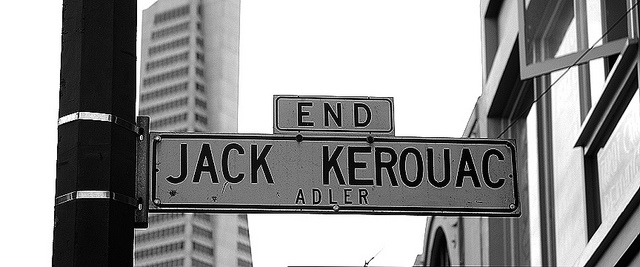
Let me tell you about my favorite way to spend an afternoon in San Francisco: I walk up the easy slope of Columbus Ave, starting at the base of the Transamerica Pyramid, passing the copper green flatiron building owned by Francis Ford Coppola, and stopping just short of Broadway, at Jack Kerouac Alley. Here, you’re standing at the world’s greatest literary intersection, the home of City Lights Bookstore and Vesuvio Cafe.

Kerouac Alley, with the Transamerica Building in the background

Kerouac Alley, with the Transamerica Building in the background

First stop is City Lights. The store, which celebrated its 60th Anniversary last weekend, was founded by Beat poet Lawrence Ferlinghetti in 1953. It’s a place that reeks of literary history–City Lights published Allen Ginsberg’s seminal (no pun intended, I swear) Howl in 1956, which led to Ferlinghetti being put on trial for obscenity (he was acquitted in a landmark court decision). City Lights has since published work by numerous other luminaries, including Frank O’Hara, William Carlos Williams, Malcolm Lowry and any major Beat poet you can think of.

City Lights Bookstore

City Lights Bookstore

More than just being a place of historical value–the city of San Francisco named it an official historic landmark–it’s the rare place where you feel instantly that books matter, and that everyone else in the place feels the same. The store has a fantastic selection of independently published books, and the top floor features a poetry section which is unmatched south of Portland’s famed Powell’s.

After about an hour of browsing the shelves at City Lights, I’ll take a few newfound treasures back across Kerouac Alley, stopping to look at the engraved stone poetic quotes from Kerouac, Felinghetti, Steinbeck, Maya Angelou, and more.

Poetry in the ground!

Poetry in the ground!

There are murals on either side of the alley, and often you’ll see buskers playing music here.

Looking down Kerouac Alley toward Chinatown

Looking down Kerouac Alley toward Chinatown. City Lights is on the right, Vesuvio on the left.

After crossing the alley I walk through the narrow door of Vesuvio, my favorite bar in the world. The bar opened in 1948 and became a hangout for the Beats. It’s adorned with photos of Kerouac, Cassady, Ginsberg, as well as rock stars, like Bob Dylan and Janis Joplin, who’ve hung out here. The opening sequence of an early Dave Chappelle HBO special was filmed at Vesuvio. And on a personal note, two good friends of mine who are now married met at a birthday party of mine at Vesuvio. I always joke that I like to think they made out in the same booth where Kerouac and Cassady once did.

Vesuvio's lovely storefront

Vesuvio’s lovely storefront

Anyway, I walk through the door of the bar, order a Maker’s on the rocks or an Anchor Steam (or maybe both), and go up the narrow, winding staircase to the second floor. I get a seat by the window and sip my drink leisurely. I read a little bit from one of the books I bought at City Lights, or I’ll jot some thoughts in a notepad, or I’ll just sit and watch the tourists and the beatniks on Columbus Avenue. As far as I’m concerned, it’s the perfect San Francisco experience.

Posted in Books, Drinks, Travel | Tagged , , , , , , , , , | 4 Comments

Anatomy of a Song: Happiness

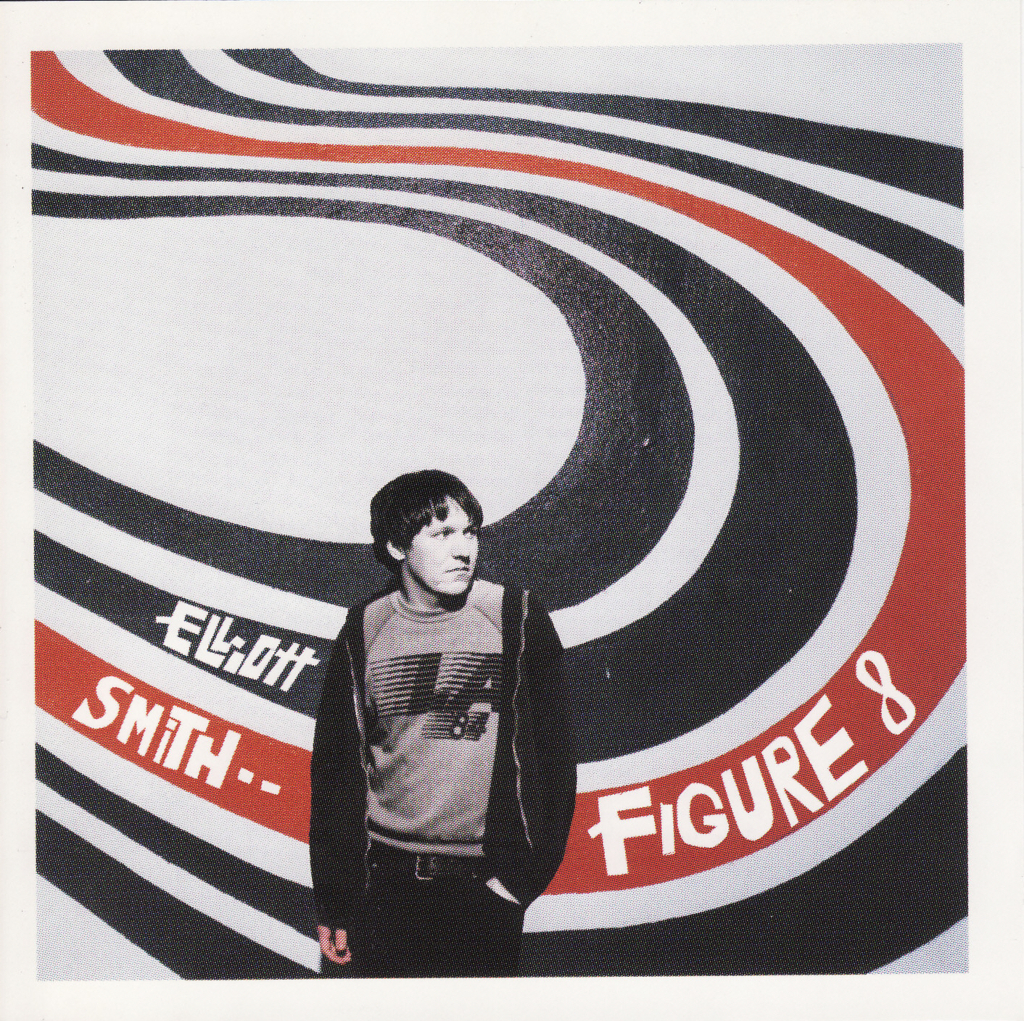
Figure 8, the album on which Happiness appears

Figure 8, the album on which Happiness appears

As always, before we get started breaking down the song, listen to it here.

Recorded and released as a single in 1999, Happiness is a beloved late-period Elliott Smith song. It’s one of the finer tracks on his 2000 album Figure 8 (which most fans think of as his “L.A.” album), and it features the lush instrumental and vocal arrangement that is the defining characteristic of that record: The song opens with a keyboard and a guitar (I think) playing a layered, pattering riff, almost like raindrops, over a thumping bass. After a few seconds a kick drum starts, and when the vocal comes in Elliott sings over guitar and a light, atmospheric organ. And oh, those lyrics. The opening verse describes, at least on the surface, a fatal car accident:

“Activity’s killing the actor
And a cop’s standing out in the road
Turning traffic away
There was nothing she could do until after
When his body’d been buried below
Way back in the day”

However, I tend to think these lyrics aren’t meant to be taken literally. As I wrote when discussing Elliott here, his lyrics, while occasionally narrative, tend to work more metaphorically. I’d argue that’s what’s happening in Happiness. The accident isn’t literally a deadly crash, but is actually about the loss of something else unrecoverable–the death of a relationship, a dissolution that neither the boy nor the girl could anything about “until after.” The activity that causes the crash is outlined in the chorus:

“Oh my, nothing else could’ve been done
He made his life a lie so
He might never have to know anyone
Made his life the lie you know”

In short, it’s about being dishonest with oneself, conforming to the system, putting on a socially acceptable front (a subject Elliott  addressed in a number of songs on Figure 8Wouldn’t Mama Be Proud, Junk Bond Trader, Can’t Make a Sound), and how this fundamental dishonesty damages the connections between people. This theme continues in the second verse:

“I told him that he shouldn’t upset her
And that he’d only be making it worse
Involving somebody else
But I knew that he’d never forget her
While her memory worked in reverse
To keep her safe from herself”

That line about “involving somebody else” is vague (although a third party is involved in the first verse as well: the “cop standing out in the road”), but at a simple level it’s about allowing someone or something to come between two people. The difference in this verse is that the girl is the one being dishonest with herself: While the boy will “never forget her,” she’s trying to turn her memory around and forget about him, “to keep her safe from herself.” The chorus then repeats, except, again, with the girl being the one to make “her life a lie.”

After the verse, he plays that rainy day intro riff once, and then launches into the gorgeous coda, which is the key to the song, both lyrically and musically:

“What I used to be will pass away, and then you’ll see
That all I want now is happiness for you and me”

Elliott was a tortured person, an abuse victim and a notoriously destructive alcoholic and drug addict. The lyrics of the coda are about trying to move beyond what’s happened in his past, perhaps to stop trying to use the escape of drugs and booze, and to be honest with himself. If he can do this, perhaps he can find happiness–the title of the song, which only appears as a resolution in the final line–for himself and the girl he loves. The music accentuates this hope for togetherness with a beautiful harmony vocal from Jon Brion. Elliott’s then-girlfriend, Joanna Bolme, said in Autumn de Wilde’s book about Elliott that he wrote the song shortly after moving to L.A. with her, a rare moment of happiness for him. It’s a song that’s sad, about how relationships fall apart, but at the same time hopeful, that maybe we can fix ourselves and make things work.

As we all know, things didn’t work out that way for Elliott. It’s the worst sort of irony that the man who wrote this beautiful, hopeful song died (whether self-inflicted or not) after an argument with a later girlfriend, Jennifer Chiba. Elliott’s tragic death adds another layer to the song, in particular the coda: We can listen to those lyrics and feel hope for ourselves, but at the same time sadness, because Elliott couldn’t find happiness before he passed away. In a way, this double meaning–which I don’t think is entirely coincidental or unintentional, as Elliott often thought about death and suicide–makes Happiness a definitive Elliott Smith sing.

A couple of other quick notes on this song: I particularly love the live and solo acoustic versions of it. Here’s one from Jon Brion’s short-lived MTV show (with Brion on xylophone); here’s one from a show at Amoeba Records in San Francisco, my favorite record store anywhere; and here’s one from a show in Paris that sounds so ghostly I almost started crying while listening to it just now. And as always, lyrics are from the beautiful Elliott Smith fan site Sweet Adeline.

Posted in Anatomy of a Song, Music | Tagged , | 2 Comments

NBA Playoffs Review

One thing I’ve noticed about the sports prediction game: Pundits almost never go back and look at their preview columns to review what they got right and what they got wrong. Well, we here in the Brooklyn Basement are big proponents of accountability, so now that the NBA Playoffs are over, I thought I’d take a quick look back at my prediction column, as well as toss in a few thoughts on what transpired over the last two months.

Eastern Conference

First Round:

Prediction: Miami over Milwaukee 4-0.

Result: Miami over Milwaukee 4-0. This was obvious.

Prediction: New York over Boston 4-2.

Result: New York over Boston 4-2. The result was what I predicted, but it didn’t happen in the way I expected, with the Celtics going down 3-0 before rallying to push the Knicks to 6, smothering New York’s offense in a foreshadowing of what was to come for the Knicks against Indiana.

Prediction: Indiana over Atlanta 4-2.

Result: Prediction: Indiana over Atlanta 4-2. And, as predicted, I didn’t watch a minute of it.

Brooklyn over Chicago 4-3.

Result: Chicago over Brooklyn 4-3. Look, how was I supposed to know that the Nets would pull a gutless no-show and get blown out in a home Game 7?

Second Round:

Prediction: Miami over Brooklyn 4-0.

Result: Miami over Chicago 4-1. Well, the Nets won exactly as many second round games as I predicted … Chicago showed a lot of heart in these playoffs, especially Joakim Noah, who played like a man possessed despite a foot injury. I’m very curious to see how this team does when they get Derrick Rose back next year.

Prediction: New York over Indiana 4-3.

Result: Indiana over New York 4-2. Indiana was better than I thought. And the Knicks … I mean, their offense just self-destructed. It’ll be interesting to see if they bring J.R. Smith back. I have to admit, I think the team as currently constructed, with Melo as the centerpiece, has probably hit its ceiling; at best, they’re the fourth-best team in the Eastern Conference, behind Miami, Indiana, and Chicago, and that’s not changing unless they make some big moves–which they can’t do because they’re capped-out and no one will take Amare’s contract. (Fun fact: Melo finished fifth in the playoffs in FG attempts. The four guys ahead of him–LeBron, Parker, Duncan, and Wade–all played at least 9 more games than he did.)

Conference Final:

Prediction: Miami over New York 4-2.

Result: Miami over Indiana 4-3. A gutty effort by the Pacers, who pushed Miami to the brink and had a legitimate shot to win this series. If the Pacers can add some depth (or even if Danny Granger is willing to accept a role-change to bench scorer) next year, they’re a legit finals contender next year. Paul George and Roy Hibbert are both great, and only going to get better.

Western Conference:

First Round:

Prediction: OKC over Houston 4-0

Result: OKC over Houston 4-2. This is where things get screwed up, because stupid fucking Patrick Beverley had to go and tear Russell Westbrook’s meniscus, crippling the Thunder’s title hopes. That James Harden trade keeps looking better and better, doesn’t it? Sorry, OKC fans.

Asshole

Asshole

Prediction: San Antonio over LA Lakers  4-1

Result: San Antonio over LA Lakers  4-0. And it wasn’t even that close.

Prediction: Denver over Golden State 4-1

Result: Golden State over Denver 4-2. I’ve already covered this in-depth here, but in brief, I’ll just say that I’ve never been happier to be wrong. Thanks to Bogut, Barnes, and the Splash Brothers for giving the Bay Area a couple weeks of hoops bliss.

Prediction: LA Clipper over Memphis 4-3.

Result: Memphis over LA Clipper 4-2. I thought this series could go either way. Blake Griffin getting hurt had a big impact, but Memphis turned out to be the stronger team anyway. It’ll be interesting to see where these teams go next year; both will be getting new coaches, and have potential for major roster changes (Memphis could lose Tony Allen, and the Clippers could go anywhere from losing Chris Paul–and thus losing their contender status–to keeping CP3 and adding Dwight Howard, or getting some combination of KG, Paul Pierce, and Doc Rivers from the Celtics).

Second Round:

Prediction: OKC over LA Clippers 4-1

Result: Memphis over OKC 4-1. Durant couldn’t do it by himself. I think OKC could have beaten Memphis with Westbrook–and man, that would have been a great series–but without him they had no shot against the tough-as-nails Grizzlies.

Prediction: San Antonio over Denver 4-2.

Result: San Antonio over Golden State 4-2. I covered this one here. Not a surprising result, but I’m still pouting about the Dubs blowing a big lead in Game 1. If they hold on in that one … le sigh.

Conference Finals:

Prediction: OKC over San Antonio 4-2.

Result: San Antonio over Memphis 4-0. Before this series started, I picked Memphis in 6, so I was wrong twice! It turned out the veteran Spurs had one more run in them–though again, the Westbrook injury profoundly altered the landscape of the Western Conference.

NBA Finals:

Prediction: Miami over OKC 4-2.

Result: Miami over San Antonio 4-3. Wow. More on this below.

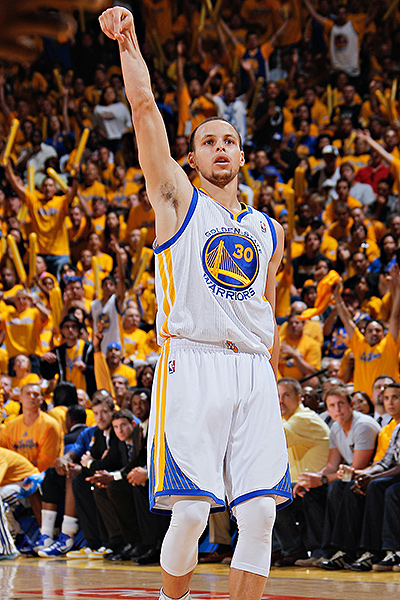
On the whole, my predictions weren’t too far off, given that there was no way I could have accounted for one of the ten best players in the league getting hurt in his second playoff game (the second straight year a round one injury devastated a contender, with D-Rose’s injury killing the Bulls in 2012). I underestimated the Spurs, who would have won the title if they’d hit a couple more free throws in the waning moments of Game 6 of the Finals, and I underrated both the Pacers and the Dubs, largely because I didn’t realize Paul George and Steph Curry (whose shooting was so hot I started calling him “Ghost Pepper”) had both made the superstar leap.

Nothing's hotter than Ghost Pepper Curry

Nothing’s hotter than Ghost Pepper Curry

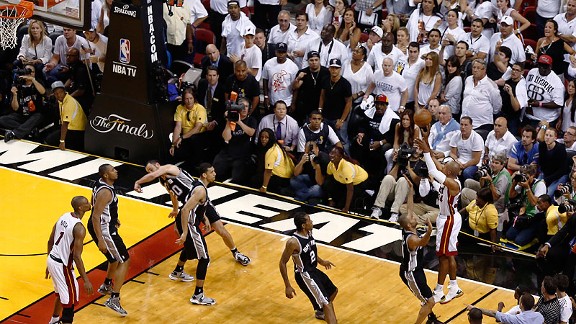
Before Game 6 of the Finals, the Dubs’ run was really the only thing I found particularly interesting about these playoffs. Of course, Game 6 was one of the more memorable Finals games of this century, featuring a turn-back-the-clock Tim Duncan 25-point first half, a fourth quarter comeback led by the headband-less LeBron James, a seemingly impossible clutch three by Tony Parker, a couple of questionable decisions by the usually unassailable Gregg Popovich, a Jesus Shuttlesworth season-saving three with five seconds left, and a couple of Chris Bosh blocks to seal the game in overtime. What a game. I’m winded just from typing all that.
Jesus Lives!

Jesus Lives!

The two teams went on to play a Game 7, and while my buddy Juan was right about the Spurs needing to close it out in 6, the final game of the season turned out to be a classic as well: It stayed close until the final minute, with Miami needing A-games from James (37 point, 12 boards, and terrifyingly furious effort every moment he was  on the court–in other words, everything we ever wanted from him) and Wade (23 and 10) and a surprise barrage of Shane Battier threes to overcome a gutty Spurs team that refused to give in. In the final minute it came down to Duncan missing a shot in the lane over Battier, LeBron knocking down an open jumper, and Manu Ginobili, in a strangely fitting coup de grace for his career, committing a stupid turnover. Great game. Great series. Great season. Thank you, basketball.
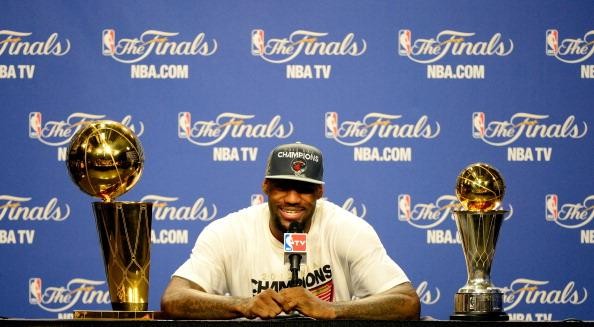
The King still reigns. Can anyone knock him off next year?

The King still reigns. Can anyone usurp him next year?

Posted in Basketball, Sports | Tagged , , , , , | 2 Comments

An Indie Press Worth Your Time: Short Flight/Long Drive

There has been a lot of fretting in the last few years about the death of the novel, the death of the book. I’ve certainly had my own share of worries about this, given the way the major presses have shrunk, and given my inability to find a home for my novel (which is good, really, I swear, even though no one will publish it … moving right along…).

Anyway, a few months back I was at Lit Crawl San Francisco, where I ran into my favorite MFA professor. I told him that I thought maybe the novel was on its way out as an artform. His response was, “People have been predicting the death of the novel since the novel was invented.” A few months after that I went to the Association of Writers & Writing Programs conference in Boston, where I spent three days wandering around the AWP Bookfair, which is essentially a massive convention center full of independent presses selling their books. It’s overwhelming; I needed a drink to deal with it (and yes, I need a drink to deal with most things in life … moving right along…), but in talking to the publishers and checking out the books and journals they were producing, I realized that this is where literature lives now. The major presses will continue to publish a few fiction novelists and poets, mostly established names, but the indies are the ones who will take the real chances, find the next trendsetters. And an upside of the technology boom is that it’s much easier to publish work independently now. (This is all true of the music and film industries as well).

I bought a ton of books at AWP, and now, four months later, that I’ve read most of them, I thought I’d write about a couple of the indie presses that I think are producing outstanding work. The first one I’d like to talk about is Short Flight/Long Drive.

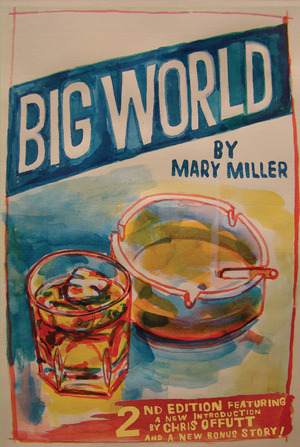
Short Flight/Long Drive was founded in 2006 to be the book publishing side of the literary journal Hobart. The editors are proudly Midwestern, which partially explains the name–most cities in the Midwest are that short flight/long drive distance from each other. The books are small, 4″ x 6″, and mostly short story collections (a genre that major publishers avoid like the plague, unless the author is already famous, like George Saunders). I bought two of their books at AWP: Big World by Mary Miller and Other Kinds by Dylan Nice. I loved both of these books.

full_big-world

I was head-over-heels for Mary Miller’s book the moment I saw that cover. A whiskey on the rocks and a still-burning cigarette in the ashtray–it’s like every writer’s desk, at least those writers who aspire to Raymond Carver. Miller is definitely one of those. These stories are set mostly in the south, and are about young women and teenage girls who are lost and trying to figure out if they want to be found. The stories are sad, tinged with hopelessness,  but tempered with the big-eyed view of youth trying to take in the whole big world. The prose is spare, unadorned, yet evocative; it reads a bit like the stuff Carver wouldn’t let his editor, Gordon Lish touch (if you’re curious about the Carver/Lish history, the New Yorker had a great piece about it a few years back). It’s a great book, and Miller is a rising star: She got a Michener Fellowship at the University of Texas and sold her first novel to a major publisher, W.W. Norton. Keep an eye out for her.

full_9780982530191.MAIN

The cover of Dylan Nice’s Other Kinds was designed by David Kramer, the same artist who did Big World, and there’s a synergy between the stories in the two books. The stories in Other Kinds are mostly about young men from Appalachian coal mining towns who find themselves in other places (from college towns to different continents) yet still carry the weight of their roots. Aesthetically, the prose comes from the same school as Miller’s, though Nice’s work carries a more explicit Hemingway influence (there are italicized interludes between stories, a la In Our Time). Of course, if you know me at all, you’ll know that I think Hemingway is about the best influence a writer can have.

So, I loved both of these books and gave them both 5-star ratings on Goodreads. And aside from the simple pleasure of reading a really good book, Miller, Nice, and Short Flight/Long Drive give me hope. I don’t see why major publishers don’t gobble up books like these, and why millions of people don’t read them, but as long as there are small presses putting out this kind of work, literature is alive and well.

Posted in Books, Writing | Tagged , , | 2 Comments

Anatomy of a Song: Born in the U.S.A.

Seems patriotic, doesn't it?

Seems patriotic, doesn’t it?

Before we get started with Born in the U.S.A., listen to it–and watch the official music video, which will figure in this discussion–here.

The first thing you’ll notice about the sound of the song, the cover of the single, the opening shot of the video, is it’s loud, brash, American. The stars-and-stripes feature prominent in both visual mediums, and the synthesizer and the drums that open the song are in your face, energetic. Springsteen’s vocal is loud and proud as well; It’s less sung than defiantly shouted, especially the refrain, that oh-so-famous repetition of “Born in the U.SA.!”

If you never actually listened to the rest of the song, you’d think it’s an anthem of blind, unadulterated patriotism. But this isn’t Toby Keith we’re dealing with. It’s the Boss, not only one of our great rock stars, but one of our great songwriters. The story these lyrics tell isn’t of glory won, but of hardscrabble struggle. The narrator is: “Born down in a dead man town/The first kick I took was when I hit the ground.” He’s a blue collar guy from one of the many mining/factory/refinery towns across America, and indeed, the video, when not showing footage of Springsteen and the E Street Band performing (incredibly badly synced, incidentally), focuses on shots of blue collar workers.

Our narrator finds himself in some kind of jam that lands him in Vietnam: “They put a rifle in my hand/Send me off to a foreign land/To go and kill the yellow man.” Then, as today, the working class made up a disproportionate number of active duty soldiers. The man telling this story makes it back from the jungle, but to a country where he’s not celebrated, but rather reviled and unable to find work: “Come back home to the refinery/
Hiring man said, son, if it was up to me/Went down to see my VA man/He said, son, don’t you understand?”

The next couple of verses tell the story of the narrator’s brother, who fought and died at Khe Sanh (one of the most notorious bloodbaths of the war–if you want to read about it, check out Michael Herr’s Dispatches), leaving behind a woman he loved in Saigon. And the final verse has our narrator look at his future and realize he has no hope: “Down in the shadow of the penitentiary/By the gas fires of the refinery/Ten years burning down the road/Nowhere to run, ain’t got nowhere to go.”

So, it’s a song about the shunning of Vietnam War veterans, who fought and died or fought and lived to come back to be called “baby killers,” but beyond that it’s a song about the marginalization of the American working class. That last verse in particular sums up the way our country’s blue collar workers have had their unions busted and their jobs shipped overseas, leaving them with little recourse beyond welfare lines (which the video shows footage of) and prison bids. (Aside: If you watch The Wire all the way through, you’ll see that this is what the greatest TV show of all time is actually about.) The music video perfectly sums up this point in the final shot, showing Springsteen from behind, looking at an American flag, then turning to look at the audience questioningly, as if to ask, “What now?”

Set to the booming rock of the E Street Band, Born in the U.S.A. is dissonant, an exercise in irony. Which brings me to my other favorite thing about the song: the way that conservative politicians in the 1980s totally missed the fucking point of the song. Famed conservative writer George Will wrote a column titled “A Yankee Doodle Springsteen,” praising the Boss and in particular Born in the U.S.A. for exhibiting cheer and patriotism in the face of struggle. And Ronald Reagan’s 1984 presidential campaign asked to use Born in the U.S.A. as its theme song. Springsteen declined, of course, and later castigated Reagan for mentioning him in speeches without having any idea what the Boss’s music was actually about.

The thing that’s always defined Bruce Springsteen for me is that no matter how big and famous he has became, no matter how extravagant those arena stadium tours get, he cares. His best songs are about the little guy who’s been dealt a bad hand by powers out of his control: the man who can’t find a job but comes up with a plan to do “a favor” for someone in Atlantic City; the accidental teenage father in The River, who for his nineteenth birthday got “a union card and a wedding coat.” Born in the U.S.A. is full of that empathy, and when politicians who stood for the exact opposite of what Springsteen’s lyrics meant misinterpreted and then tried to co-opt his song, he stood up to them. That’s why Born in the U.S.A. is my favorite Springsteen song.

Posted in Anatomy of a Song, Music | Tagged , , | 1 Comment

Dear Vice Magazine: What the Fuck?

I’ll be the first to admit I don’t understand the fashion world. Not even a little bit. Every fashion spread I’ve ever seen in a magazine (and I used to work at a magazine that had a quarterly fashion feature) seemed to me to be nonsensical and totally disconnected from reality. But I can’t think of one that actually made me furious the way that this spread in Vice does. The editors over there apparently thought it was a great idea to dress up some models in fashionable clothes and put them in the positions of famous writers just before they committed suicide. So, you have among others, a shot of a model playing Virginia Woolf standing in a creek holding a rock (Woolf filled her pockets with rocks and drowned herself in a river), and a shot of a model playing Sylvia Plath kneeling before an oven (Plath gassed herself in her kitchen–with her children in the next room).

I mean ... really?

I mean … really?

Forgive me for being dim, or maybe self-righteous, but am I the only one who thinks that this is incredibly fucked up? I know we romanticize the lives and deaths of famous artists and writers, and I’m as guilty as anyone of this–just ask my neighborhood liquor store clerk about my bourbon habit. But let me ask a question: What if you were one of Sylvia Plath’s children and you saw that image? How would you feel? The people being depicted in these images aren’t characters from these writers’ works; they were real people who had souls so tortured that they couldn’t bear to live any longer, and so took their own lives, surely devastating their friends and families.

Look, it’s one thing to recreate a famous suicide if you’re trying to understand what drove the person to the act. I have no problem with the recreation of Virginia Woolf’s death in The Hours. That’s a work of art attempting to make sense of the event, the person’s struggle. But this photo shoot isn’t adding anything to the discourse on the human condition. The editors and designers and stylists at Vice are using other peoples’ suffering to sell shit. It doesn’t matter if the people suffered famously–it’s fucked up.

Update: It looks like Vice took the spread down. We’ll call that a win for common decency.

Posted in Writing | Tagged , , , , , , | 5 Comments

My Favorite Ballparks

Inspired in part by Jonah Keri’s story on Grantland, I thought I’d write a post about my favorite ballparks. It’s hardly as comprehensive as Keri’s; I’ve only been to twelve Big League stadiums (that includes two that have been demolished, Shea and the old Yankee Stadium, and one that will be soon, Candlestick), so it seems like a Top Five countdown, with one honorable mention, seems about right. I have no pretense toward objectivity here: These rankings are about my personal experience at these parks, and as such are entirely predicated on my biases. If you don’t like what I have to say, write your own list. (For the record, the ballparks I’ve visited that didn’t make the cut: Safeco in Seattle, the Big A in Anaheim, Coors in Colorado, old Yankee Stadium, Shea, and Candlestick.) Now, on to the countdown!

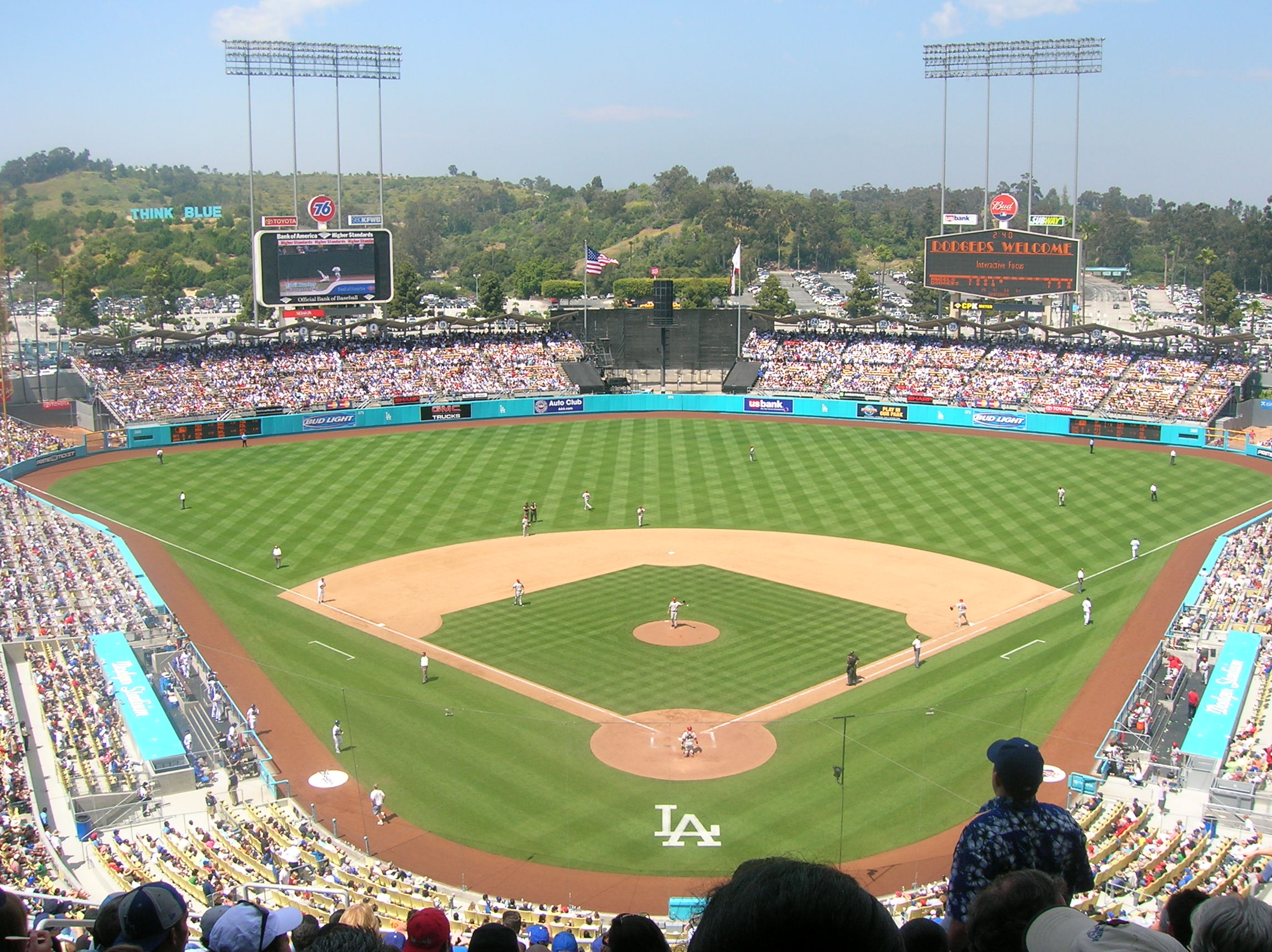
Honorable Mention: Dodger Stadium

This will probably surprise many of my friends, as I’m a diehard NorCal guy who bitterly hates all L.A. and Orange County sports teams. But I went to college in Santa Barbara, a two-hour drive from Dodger Stadium, and was good friends with a few Dodger fans, so I’ve been to several games at Dodger Stadium over the years. And somewhat surprisingly, I’ve always enjoyed the experience. From an outsider’s perspective, there’s something very “L.A.” about going to a game there: The stadium is nestled in the hills just above and to the east of downtown, lending it a panoramic feeling with lovely views that capture the landscape of the region. Of course, as befits L.A., the traffic is horrible getting in and out of the parking lot–the main reason for the at least somewhat true stereotype of fans who show up in the third and leave in the seventh. But in spite of the fairweather element to the team’s fan base, there are a lot of true diehards, many of them from the largely Latino neighborhoods that surround the stadium (one of my college roommates grew up ten minutes from from the ballpark).

The downside of the true-diehard-fan element is there’s a sense of violence in the air, surpassing perhaps even Philadelphia’s sporting events: there’s no beer sold in the bleachers, where I once saw four fights in my section alone during a Dodgers-Padres game; gunshots have been fired in the parking lot; and of course there was the horrible Bryan Stow incident, when a Giants fan was nearly beaten to death after a game. My Dodger fan friends swear that the violence is a product of Raiders fans who needed a new team after the silver and black went north. I don’t know. At any rate, aside from this black mark, which as a diehard sports fan I actually understand (at least a little), Dodger Stadium is a lovely, classic (third-oldest park in the Majors) place to watch a ballgame. Although I fail to see the hype behind the Dodger Dog.

From the seats high above the field--pretty much the only place I ever sit

Dodger Stadium from the seats high above the field–pretty much the only place I ever sit

5. The Oakland Coliseum

I know, it’s a concrete pit. I know, it’s in a brutal neighborhood. I know, it’s usually empty. But allow me to explain: It used to be different. In the early 1990s, when I moved to the Bay Area from New York, it was an open stadium, with views of the East Bay hills, a grass lawn above the bleachers (which were actual bleachers, and which were $4 a pop for seats), and great food options, from the sausage stand Keri mentioned in his story, to the Black Muslim Bakery’s sandwiches (before the deeply disturbing Yusuf Bey scandal), to the steamed Chinese pork bun I had at my first game there.

What the Oakland Coliseum used to be

What the Oakland Coliseum used to be

Then, in 1995, Al Davis moved the Raiders back from L.A. and conned the city of Oakland into building a monstrosity of a centerfield grandstand that destroyed the ballpark’s ambiance. And then the A’s robber baron owners began tarping off the upper decks in a not-so-subtle attempt to drive down attendance so they could move the team to the tech money-fertilized greener pastures of Silicon Valley. The team’s attendance has languished since, though fans did come out in droves for the A’s playoff series against the Tigers last year. At any rate, there is still a diehard fan base in Oakland, and the Coliseum was once a great place to watch a ball game. I could write 10,000 more words about this, but instead I’ll just say, Fuck you, Al Davis, and Fuck you, Lew Wolff.

What Al Davis, and then the A's idiot owners, did to it

What Al Davis, and then the A’s idiot owners, did to it

4. Phone Booth Ballpark

Or, Corporate Telecom Field, if you prefer. Or, as the brilliant Grant Brisbee at McCovey Chronicles calls it, Mays Field. Aside from my snark about the name, the Giants truly do have a beautiful homefield, with views of San Francisco Bay and the Bay Bridge. McCovey Cove beyond right field has become the home to all sorts of shenanigans, from people diving after Barry Bonds home run balls, to a guy cruising around in a floating Back to the Future-style Delorean, to the time I saw two drunk guys jump in and race each other across the cove, only to get arrested when they reached the other side (Addendum: One of the guys lost his wallet when he jumped in, and a homeless guy saw it floating there and jumped in to get it. He was also arrested.) There are also great food and beer options (the garlic fries, ye gods). There’s the way Giants fans turned it into the loudest stadium in baseball during the 2012 NLCS and World Series. And finally, I’m partial to the place because it’s the rare stadium that actually fulfilled its promise to revitalize its neighborhood–China Basin, once home to a sea of industrial warehouses, now sports a lovely embarcadero, restaurants and bars, and sometime in the next few years, a new Golden State Warriors basketball arena. And Giants owners payed for the ballpark themselves, instead of taking public money and then pocketing the profits, as so many other sports owners have.

And I mean, hell, just look at this photo. It makes me want to hop a flight to SFO right now.

I left my heart in San Francisco

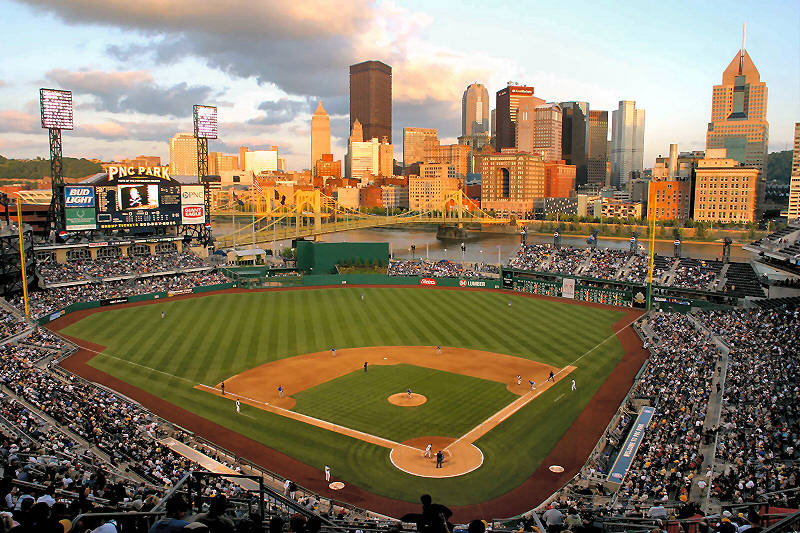
3. PNC Park

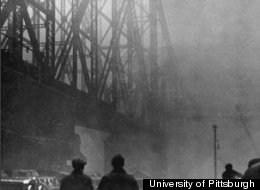
There’s a sneaky secret about Pittsburgh: It’s actually a beautiful city. During its industrial heyday, the city was rightly known for being a polluted hellhole (the skies could be so black with pollution that noon could seem like midnight).

Hello, emphysema!

Hello, emphysema!

But a funny thing happened when all those steel mills closed: The skies cleared! This was an economic disaster, but an environmental blessing that revealed a city perched at the lovely confluence of three might rivers, bright yellow steel bridges crossing those rivers, and hills on either side that afford great views of the town (panoramically, the city reminds me a great deal of Portland). If you’re coming from downtown, you walk across those bridges to get to the ballpark, and from your seat in the stadium, you can take in the river and downtown–the best sight lines in all of baseball. And the food at the ballpark is great, too, especially Pittsburgh’s signature dish: the Primanti Brothers sandwich.

The best ballpark sight lines in all of baseball

The best ballpark sight lines in all of baseball

2. Camden Yards

As much as I love Mays Field and PNC Park, Camden Yards, the stadium that started the retro design craze, is my favorite of the newfangled ballparks. Maybe because it was the first. Maybe because when I saw a game there I ate three pulled pork sandwiches from Boog Powell’s BBQ (they were sublime). Maybe because they filmed a scene for an episode of The Wire there (I’m really pissed I can’t find the clip). Maybe because the old B&O Railroad warehouse looks so cool beyond the rightfield fence. Maybe because there’s a strip club like a block away (or there used to be, anyway). No matter how you shake it, I love Camden.

The only thing owner Peter Angelos ever did right for the Orioles.

The only thing owner Peter Angelos ever did right for the Orioles.

But at a certain point, the self-consciously retro can’t top the true vintage experience, which is why my favorite ballpark couldn’t be any other than…

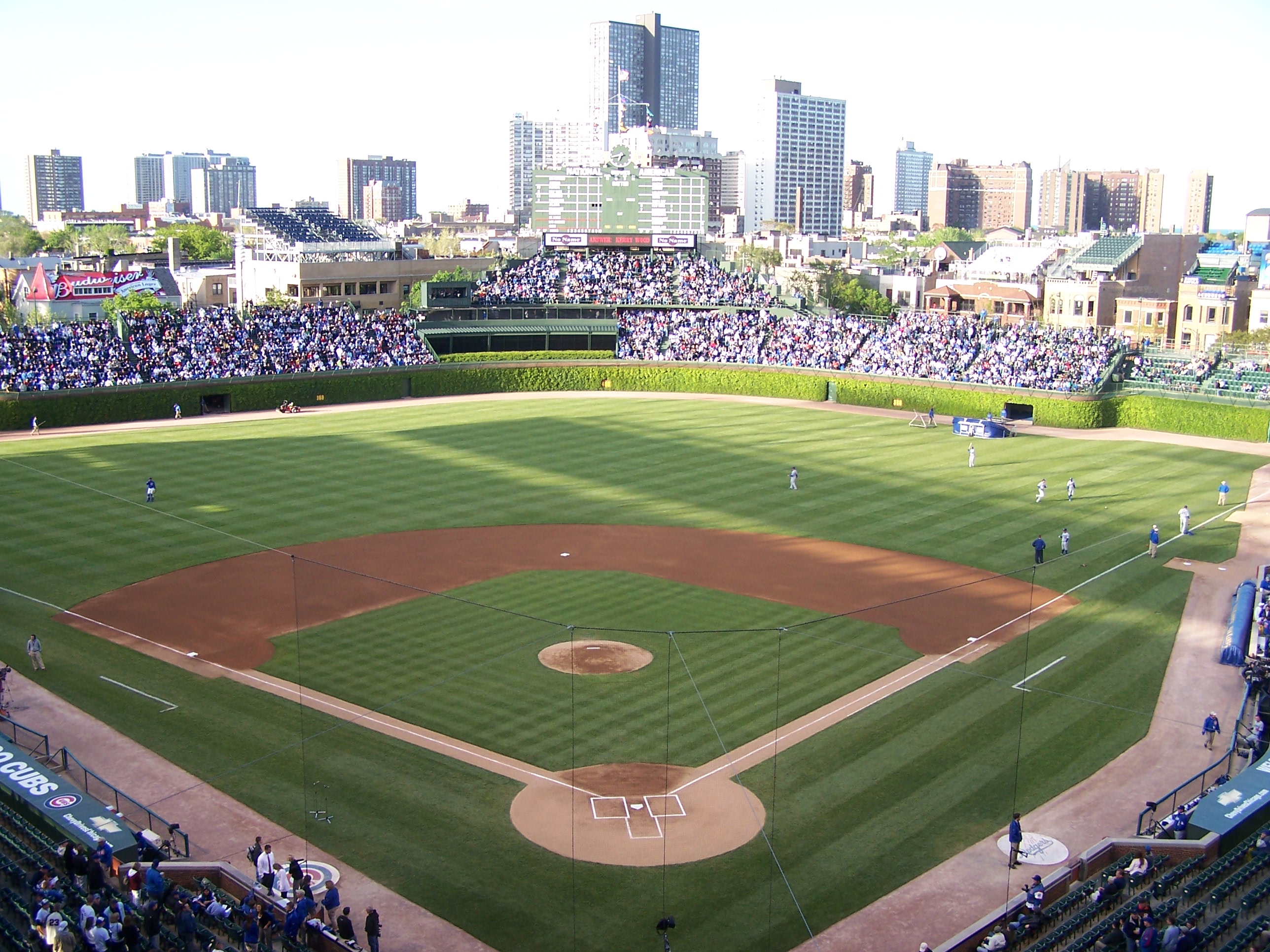
1. Wrigley Field

Look, Wrigley’s not perfect. It’s a strangely bland structure from the outside. The food and beer options suck. The bathroom situation is a nightmare. But none of that matters when you’re in the midst of the true Wrigley Field experience. The uniqueness begins with the time of first pitch: Unlike any other big league club, the Cubs play the vast majority of their home games during the day, so everyone at the stadium has the day off. Ditching work, or in Ferris Bueller’s case, school, to go to Wrigley is a time-honored Chicago tradition. No matter which way you come to get to the stadium, you pass through ten straight blocks of watering hole after watering hole, seemingly every storefront dedicated toward getting you snockered. Then you sit in your cramped seats (or packed bleachers), and while the beer options suck, at least the vendors are bringing those Old Styles right to your seat. And then you watch the game, staring out over a field that’s so old-timey it seems older than time itself, with ivy draped in vines over the brick walls, the old scoreboard and the pennants whipping in the wind, and you look at the buildings across the street with their rooftop grandstands, and you feel for a moment like you’re really in a Rockwell painting, that this is what America is supposed to be. And you hope one day the Cubbies can win the World Series, that a championship celebration does come to this magical place. And once the game’s over, you exit the ballpark and you barhop your way back toward home. Maybe you’ll meet the girl of your dreams–it seems like every pretty girl that graduated from a Big Ten school in the past five years is at the game or in one of the bars afterward. But more likely you’ll find yourself stumbling alone into your bed, though it’s barely dark yet, and you’ll pass out with a smile, knowing that you just spent a day in paradise, or as they call it in Chicago: Wrigleyville.

Shangri-La

Shangri-La

Posted in Baseball, Sports, Travel | Tagged , , , , , , , , , , , , , | 2 Comments

Desert Island Album #6: Sticky Fingers

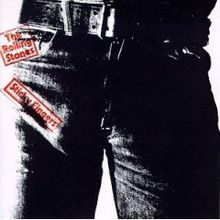
220px-RSSF71

The album cover:

Truly one of the all-time iconic rock ‘n’ roll album covers, the image of a bulging crotch (the natural assumption is it’s Mick Jagger’s, though Warhol claimed it isn’t, and the exact identity of the model has never been verified) with an actual working zipper installed in the pants was the idea of pop artist Andy Warhol. The innuendo behind “sticky fingers” should be obvious, as the Stones continued to push the boundaries of late ’60s/early ’70s cultural acceptability. The Stones recorded much of Sticky Fingers (listen here) at the famous Muscle Shoals studio in Alabama in 1970, during their absolute creative peak, and it was released in 1971.

The first sound you hear:

The distinctive open-G tuned five-string guitar riff Keith Richards launches into to start the anthemic Brown Sugar.

The last sound you hear:

A chorus of strings fading out the final note of the extended instrumental outro of Moonlight Mile. If Sticky Fingers begins with a look-at-me roar in Brown Sugar, Moonlight Mile brings the album to a close with a sigh of exhausted content.

Track by Track:

The loud, brash, rollicking Brown Sugar, one of the Stones’ most famous songs, kicks off the album. There are so many things that make this song unique–the tuning Richards uses on his 5-string guitar; Jagger’s vocal delivery, bordering on unintelligible, which probably kept him from being burned in effigy for his lyrics; Bobby Keys’ saxophone solo intertwined with Mick Taylor’s sharp lead guitar licks. But it all goes back to that opening guitar riff, the one any rock ‘n’ roll fan will recognize instantly.

Next is the slow, almost spacy jam Sway, with the great echoing chorus, “It’s just that evil wine, that’s got you in its sway,” and the long outro guitar solo by Taylor, which doesn’t get mentioned among great guitar pieces nearly as often as it should. (Random aside: I saw Cat Power do a cover of this at Outside Lands one year, and it was awesome.)

Track three is the incomparable Wild Horses. I can get a little (okay, a lot) hyperbolic in these write-ups, but this really is my favorite song of all-time. I love everything about it: the slowly strummed acoustic intro and rhythm track, the tone of Jagger’s voice, the lyrics about the lost soul looking for something left behind (Keith Richards wrote the initial version of the song about having to leave his newborn daughter to go on the road); the tinkling piano (which was not, as some believe, played by Gram Parsons on the Stones’ version–though Richards did give the song to Parsons, who recorded a great version with the Flying Burrito Brothers); and Taylor’s electric lead, which isn’t fast or flashy, but on which every single note rings in perfect timing and tone. I love this song so much I once gave a homeless guy with a guitar $20 to play it for me on my birthday, and I made it the centerpiece of a short story I wrote in grad school (which I’ll link here if it ever gets published).

The next song is the extended jam Can’t You Hear Me Knocking, which features Richards again providing an alternate-tuned riff over which Taylor plays a wailing solo that may be the best guitar piece in the entire Rolling Stones catalog. Side A ends with You Gotta Move, a slow blues with a fucking dirty (and I mean that in the best way) slide guitar riff and a slinky vocal which sounds like it’s being sung by a bar-room pimp. This song would fit in the dirtiest basement bar in Mississippi.

Side B opens with the up-tempo, rocking Bitch, a great song to listen to whenever you share Jagger’s sentiment that, yes, “love is a bitch.” Next is I Got the Blues, another slow blues which features a killer horns section and organ solo.

The final three songs on the album are all iconic Stones tracks. The first is Sister Morphine, a dark, haunting heroin-inspired acoustic song about lying in a hospital bed following an overdose. The next is the country-infused Dead Flowers, a from-the-other-side-of-the-tracks tune from the perspective of a drug addict looking at the happy life of a rich woman he once loved. This song is so good that Townes Van Zandt, one of the greatest songwriters who ever lived, covered it (and the Coen Brothers used his version in the final scene of The Big Lebowski). The album closes with the multi-layered, utterly gorgeous Moonlight Mile, a song which, with its epic string arrangement over marching drum rhythm, sounds unlike anything else in the Stones’ catalog.

The signature track:

Most people would say Brown Sugar, but this is my Desert Island Album list, goddammit, so it’s Wild Horses, and you’re not allowed to disagree with me.

The signature lyric:

The signature sound is certainly that of Richards’ open-G tuned guitar, from which he wrangled the album’s most distinctive riff, the intro to Brown Sugar. But the signature lyric? That’s tougher. “Wild horses couldn’t drag me away”? “Brown sugar, how come you taste so good”? How about “I won’t forget to put roses on your grave” from Dead Flowers? It’s one of those, probably the Brown Sugar one, although my favorite will always be Wild Horses. The whole song.

The essence of the album:

The Stones, much like the Beatles, are a hard band to pick just one album from. One of the tricky things about a Desert Island Albums list is limiting yourself to a single album from each of your favorite bands. In the late ’60 and early ’70s the Stones released, consecutively, Beggar’s Banquet, Let it Bleed, Sticky Fingers, and Exile on Main Street, a four album-run that only the Beatles and maybe Led Zeppelin can compete with. Exile, in particular, is the album most people choose as the Stones’ best, and if I stretched my Desert Island series to twenty records, it’d definitely be on the list. I love Exile and Sticky Fingers because they are the albums on which the Stones explore country music, with tracks like Wild Horses, Dead Flowers, Sweet Virginia, and Torn and Frayed; these are pretty much all of my favorite Stones songs. (A brief-ish aside: When I compare the Beatles and Stones, I think of the Beatles as the more revolutionary sonic experimenters, but the Stones explored the genres of American music further–the Beatles don’t have a blues like Ventilator Blues, or a country song like Dead Flowers. When I was younger, I preferred the experimentation and the optimism of the Beatles. As I’ve gotten older, I’ve turned more to the traditional appeal and darkness of the Stones.)

So, it’s close between Exile and Sticky Fingers for my favorite Stones album. The tie-breaker is that Sticky Fingers has my favorite song, Wild Horses. And, to echo what I wrote about Rubber Soul and In My Life, if I’m going to be stranded on a desert island for the rest of my life, I’m going to have to be able to listen to Wild Horses. That’s non-negotiable.

Find all my Desert Island Albums here.

Posted in Desert Island Albums, Music | Leave a comment

If I Could Play…

One of Oscar Wilde’s greatest quotes (and he has many), is, “Talent borrows, genius steals.” I don’t consider myself a genius, but when I read the blogpost my good buddy Juan Alvarado Valdivia wrote last week, in which he detailed which position he would play in each major sport, I knew it would be a genius move to steal his idea. So thanks, Juanito! Here’s my version:

Football: Slot Receiver

I’d love to say quarterback, but I’ve never been the guy who gets the glamour spot. I’d love to be a hard-hitting safety or linebacker, the guy who doles out the punishment, but in my life I’ve taken a lot more punishment than I’ve ever given, so it’s far more likely that I’d be the guy who gets drilled running across the middle. That’s the slot receiver, the guy who’s undersized, probably doesn’t have burning speed, but has quick feet and smarts that help him get open on underneath routes and the concentration and hands to make the tough catches in traffic to keep the chains moving, even if a linebacker is waiting to try to take his head off when the ball comes. He’s tough, he’s resourceful, and he’s integral to the offense. He may not be the receiver that makes an opposing team’s fans wake up screaming in the middle of the night, a la Jerry Rice, but he is the guy who, after making his third straight third-down conversion catch on a big drive, leaves opposing team’s fans saying, “Fuck, that guy again?”

Favorite Slot Receiver:

This is too easy. In the annual Thanksgiving Turkey Bowl I played in for years with my High School buddies (we finally quit last year after the injury toll became too severe), I got the nickname “Welker,” after former Patriot Wes Welker, the undersized receiver who became Tom Brady’s favorite target and, despite going undrafted out of college, led the NFL in receptions three times.

There I am getting open on a crossing route

There I am getting open on a crossing route

Soccer: Striker

Because I’m not especially knowledgeable about soccer, and if I play soccer, I want to score goals, goddammit.

Favorite Striker:

This one’s easy, too. Lionel Messi, the dimunitive Argentinean genius, whose low center of gravity, quickness, and unbelievable skill with the ball have made him the best player in the world, and put him in the conversation for best of all time. Also, he gets to play for Barcelona, which would be pretty awesome.

Small dude. Big trophy

Small dude. Big trophy

NBA: Shooting Guard

Like my pal Juan, I kind of wish I could be a point guard. The guy who’s in control of the action, keeps command of the ball like a yo-yo on a string, makes all the smart plays, orchestrates the offense, and leads the team. Chris Paul. But that’s not really who I am on a basketball court. Back in middle school, when I was one of the few white kids on the schoolyard courts in Richmond, I remember another kid telling me, “Damn J, you got a shot. You just ain’t not got no handles.” Almost twenty years later, this scouting report is still pretty freaking accurate. If I’m the guy bringing the ball up, the team is probably in trouble. I don’t handle pressure defense well, and I often make bad passes trying to make a flashy play. But as the guy curling off the screen for a jumper? The guy floating out to the wing on a fastbreak? The spot-up shooter in the corner waiting to bury a catch-and-shoot trey? Yeah, that’s my game. The quiet assassin.

Favorite Shooting Guard:

I’d love to say Steph Curry, but he’s more of a hybrid guy, with a lot of point guard in his game. No, I’m more like Ray Allen, who made an All-Star career out of splashing threes through even the tiniest of windows. Jesus lives.

I've seen Jesus--he plays basketball in Brooklyn

I’ve seen Jesus–he plays basketball in Brooklyn

Baseball: Pitcher

Part of me wanted to say shortstop, the captain of the infield, but the reason baseball is my favorite sport is the cat-and-mouse game between hitter and pitcher, as the pitcher works locations on and off the plate, fastballs and off-speed pitches, to mess with a hitter’s eye level, his timing, throw him off balance and try to make him look like a fool. That’s the guy I always wanted to be on the baseball field.

Favorite Pitchers:

My favorite guy to watch was always Pedro Martinez at his peak (even though I hate the fucking Red Sox), because he combined a cerebral approach (his fastball, curve, and change were all plus-plus pitches, and he really knew how to mix them) with dominant stuff (his fastball could touch 98), all coming from a small package–he was less than six feet tall, rail thin.

But the guy that I think I’d be a little closer to is another smallish, skinny guy whose bulldog demeanor helped turn him into an ace: Tim Hudson, who led the Oakland A’s staff for years before moving to Atlanta (ugh). Huddy had good velocity, but he mostly beat hitters with his toughness and his smart pitching, throwing nasty sinkers, sliders, and cutters (A’s catchers needed more than one hand to give Hudson his signs), forcing hitters to beat ball after ball into the ground. That’s the guy I’d be.

The Bulldog

The Bulldog

Hockey: Goalie

This one’s easy. I played goalie for years. It’s a position that requires mental toughness–any mistake can cost your team a game, and you have to be able to instantly forget about the puck that got behind you and focus on the next shot. And there’s no better feeling than being the hot goalie who stole a win on a night your team was outplayed.

Favorite Goalie:

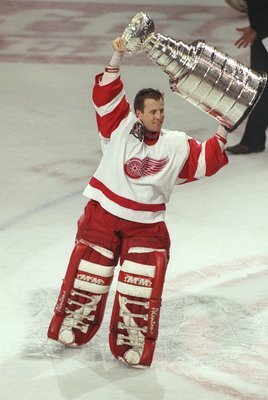
He’s not necessarily my favorite, but Mike Vernon embodies the qualities I’m talking about. In 1994, Vernon, a veteran of more than ten NHL seasons, came to the Detroit Red Wings, who despite being stacked with talent had underachieved in the playoffs. This continued as the team lost in the 1995 Finals and was upset in the Western Conference Finals in 1996. Vernon bore much of the blame for these failures, and he shared the starting position during the 1996-97 season. But in the ’97 playoffs he won playoff MVP as Detroit won its first Stanley Cup in 42 years. Plus, he kicked Patrick Roy’s ass during one of hockey’s greatest brawls.

Resilience, thy name is Mike Vernon

Resilience, thy name is Mike Vernon

No matter the sport, my alter-egos tend to be small, quick, tough players who battled adversity and became integral parts of their teams’ successes. They got a little bit of glory, but mostly they’ve got grit.

Posted in Baseball, Basketball, football, hockey, soccer, Sports | Tagged , , , , , , | 1 Comment

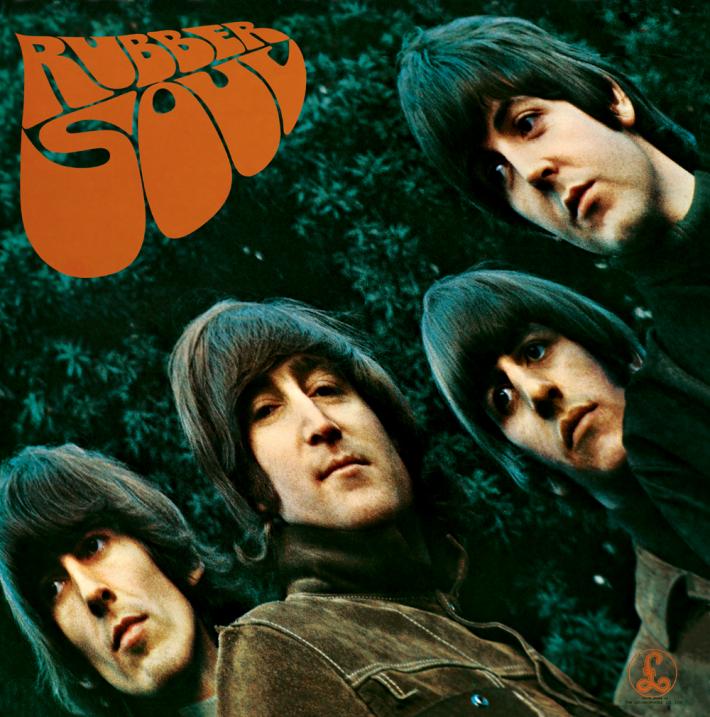
Desert Island Album #5: Rubber Soul

view

The album cover:

We see the Fab Four from below, photographed at an off angle that gives them a floating, dreamy kind of appearance, which is accentuated by the flowing script of the album title. The text is reminiscent of the font you’d see on a Bill Graham Productions concert poster from the mid-sixties. The cover image was a calculated attempt to take advantage of the booms in both folk music and psychedelic rock that were happening at the time. (The album, which you can listen to in full here, came out in December 1965, and it features a number of acoustic songs and was marketed as the Beatles’ “folk album.”) The psychedelia is also evident in the music: This is the first Beatles album in which you can clearly hear the influence of drugs in the songwriting (I’ve always thought of Rubber Soul as the Beatles on weed, Revolver as the Beatles on acid, and Sgt. Pepper’s Lonely Hearts Club Band as the Beatles on a fistful of everything the guy at the Chelsea Drugstore had in stock). Also, for the record, I have a jacket that looks almost exactly like the one John is wearing.

The first sound you hear:

The electric guitar intro to Drive My Car, a sort of brash, upbeat, jumping start to the album.

The last sound you hear:

A sliding electric guitar riff that fades out as John sings “nah nah nah,” at the end of Run For Your Life. Sonically, it’s similar to the guitar intro of Drive My Car, providing a nice bookend to the album.

Track by Track:

The album opener, Drive My Car has all the classic Beatles elements: a rock ‘n’ roll electric guitar, vocal harmonies, witty, subtle songwriting (let’s be clear: The song is addressed to a Beatlemania-era groupie, and when John sings, “Baby you can drive my car,” he is not talking about an automobile)

The next track is the classic Norwegian Wood, a waltz that features the first instance of George Harrison playing sitar (which he learned from the legendary Ravi Shankar) on a Beatles recording. The song tells a tale of a man who goes out with a woman and goes back to her place and at the end of the date she goes to bed leaving him to sleep in the bath. My favorite part is the various interpretations of the final set of lyrics (“And when I awoke, I was alone, this bird has flown/So I lit a fire, isn’t it good, Norwegian wood”): Some people interpret the fire as a reference to lighting a joint, which goes with my conception of Rubber Soul as the “Beatles on weed” album. But my favorite case of clashing interpretations come from my freshman year of college: I was having a conversation with my roommate and my dad, who was visiting, and my roommate said, “I like this song because the girl stands him up, so John burns her house down.” My dad looked at my roommate and said, “What are you talking about? He’s looking contemplatively into the fireplace. Are you some kind of psycho?”

The next track is Paul’s You Won’t See Me, a wistful, sonically multi-layered breakup song, which leads into a true masterpiece, arguably the Beatles’ most underrated song (if it’s possible for a Beatles song to be underrated), Nowhere Man. The song opens a cappella, then picks up with guitars and sad lyrics about a directionless man who’s totally lost his way in life. John, who went through periods of depression, wrote it about himself in a moment of introspection.

George Harrison wrote the next song, Think For Yourself, a fuzzy-guitar’ed intro with fairly typical sixties lyrics about not trusting authority figures. Next comes the harmony-filled The Word, a song about, naturally, the importance of love.

Side A of the record ends with the classic Michelle, Paul’s serenade to a French-speaking girl, full of words that go together well. Michelle won the Grammy Award for Song of the Year, and has aged so well that Paul played it for the First Lady at the White House. It was also the first song I ever learned to play for a girl on guitar, which worked out so well that I didn’t play it again for ten years.

Side B opens with What Goes On, sung by Ringo, which means I’m going to move on and talk about the next song, Girl, a slinky song which John has alternately claimed is a portrayal of an idealized girl or a slagging of Christianity. I see it simply as a classic song of a girl you can’t help but kill yourself for, even though you know she’s going to laugh it off–sort of like a PG version of Led Zeppelin’s Heartbreaker.

Next is the jangly acoustic intro of I’m Looking Through You, a Paul-written breakup number (it ends “Oh, I’m looking through you/Baby you changed”) that transitions from acoustic to electric on the break. It’s long been a favorite of mine, and is another song from the Beatles catalog that is sometimes overlooked.

Following I’m Looking Through You we have the album’s most famous track, In My Life. John’s tale of old friends and lovers fading from consciousness in the wake of a new love is one of the Beatles’ signature songs, and Rolling Stone ranked it #23 on its 500 Greatest Songs of All Time list. I’d go on, but I’ve already written extensively about my personal relationship with the song.

Next is the jangly Wait, redolent with percussive guitar chords and background whistles that somehow evoke the noises of traffic for me (I mean this in a good way, even if it doesn’t sound like it). The high ringing guitar intro of If I Needed Someone follows. It’s a song that with the twangy guitar and the echoing vocal harmony, is perfectly evocative of its time.

The album ends with Run For Your Life, a Beatles version of a murder ballad. John claimed this was his least favorite Beatles song, but what does he know? I’ve always liked it, though maybe that’s just because I recall listening to it a bunch after a bitter falling out with a girl years ago.

The signature track:

Because it’s the most famous track on the album, and my personal favorite, it couldn’t be anything but In My Life.

The signature lyric:

The chorus of In My Life, one of the most touching lyrical compositions in pop music:

“Though I know I’ll never lose affection
For people and things that went before
I know I’ll often stop and think about them
In my life I love you more.”

The essence of the album:

One of the tricky things about a Desert Island Albums list is limiting yourself to a single album per band. It’d be pretty easy to just say, “I’ll take all the Beatles albums to my island,” and call it a day. Plus, everyone has a different Beatles album that he or she prefers. My dad’s is Revolver; my freshman year roommate’s is Abbey Road; back in college, mine was Sgt. Pepper; I even once got a photo editor friend to photoshop me onto the album cover.

Can you see me?

Can you see me?

But as I’ve gotten a little older, the acoustic sound of this album (notice how many times I used the word “jangly” in this write-up) is the one that’s stayed with me the most. And more than anything else, if I’m going to be stranded on a desert island for the rest of my life, I’m going to have to be able to listen to In My Life. That’s non-negotiable.

Find all my Desert Island Albums here.

Posted in Desert Island Albums, Music | Tagged , | 2 Comments